Edit this page on GitHub (opens in a new tab)
Si estás aprendiendo sobre Zcash por primera vez, te darás cuenta inmediatamente de que pueden ocurrir dos tipos de transacciones [transactions]: transparentes [transparent] y blindadas [shielded]. Además, si has seguido los últimos avances en el ecosistema de Zcash, es posible que hayas aprendido sobre las Direcciones unificadas [Unified Addresses], o UA. Cuando las personas de la industria de Zcash hablan de transacciones blindadas, se refieren a transacciones que involucran direcciones [addresses] codificadas para los protocolos sapling u orchard. Las UA están diseñadas para unificar cualquier tipo de transacción blindada o transparente en una sola dirección. Esta generalización es clave para simplificar la UX en el futuro. El propósito de esta guía es complementar la comprensión de las UA con ejemplos visuales concretos.
Actualmente hay tres tipos principales de direcciones en uso. Estos incluyen

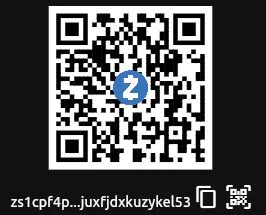
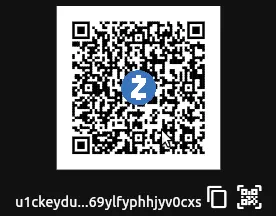
Lo primero que hay que notar es que la longitud de cada tipo de dirección es diferente. Puedes verlo visualmente por el número de caracteres en la cadena de dirección o mirando los códigos QR asociados. A medida que aumenta la longitud de la dirección, el código QR tiende a alejarse e incluir más datos en el cuadrado.
t1goiSyw2JinFCmUnfiwwp72LEZzD42TyYu tiene 35 caracteres de longitudzs1cpf4prtmnqpg6x2ngcrwelu9a39z9l9lqukq9fwagnaqrknk34a7n3szwxpjuxfjdxkuzykel53 tiene 78 caracteres de longitudu1ckeydud0996ftppqrnpdsqyeq4e57qcyjr4raht4dc8j3njuyj3gmm9yk7hq9k88cdkqfuqusgpcpjfhwu3plm2vrd32g8du78kzkm5un357r4vkhz4vhxd4yfl8zvszk99cmsc89qv4trd7jzkcs8h6lukzgy25j8cv76p0g603nrrg6yt6cxsh2v8rmkasskd69ylfyphhjyv0cxs tiene 213 caracteres de longitudLo segundo que hay que notar es el prefijo de cada cadena de dirección: las transparentes comienzan con una t, las sapling con un zs y, finalmente, las UA con un u1.
Es importante tener en cuenta:
Como se explica aquí, se pueden crear UA con distintos receptores: alguna combinación de tipos de direcciones transparentes, sapling y orchard. Además de una UA completa, estas son las más comunes que encontrarás en la práctica:
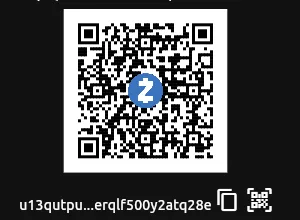
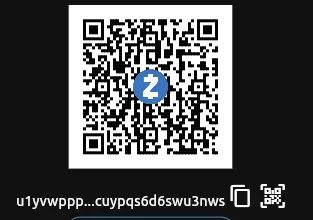
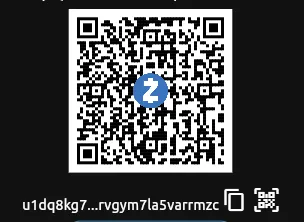
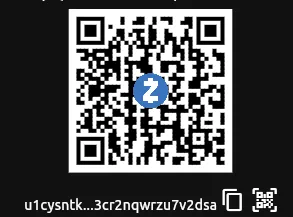
Lo primero que hay que notar es que todas estas UA provienen de la misma clave privada. Lo segundo que hay que notar son las longitudes de cada tipo de UA:
u13qutpuktq026dwczvxmnh8mxdacsjx3kg2rrhzgns8zsty53t9y0hqp5d440zc9w7z7zkkjqw8dq0uuc0mkt883464mq8mkys7l4xjnhylh7u3u02ukknurm5yxerqlf500y2atq28e 141 caracteresu1yvwppp7ann6n3pgkysdu0spvr50w4jf4jwgme3c8x8fp4av59rupgvdd3fddc3f2cwrk3ghs5lxt87ggj8cvjuzcrf4jkejwlu9pc83gk2vtx03ucqcc3ed0furcuypqs6d6swu3nws 141 caracteresu1dq8kg78fgpjsc7dn2ynpdzc8xu99wra0jec4jy30rjqk5frsj62qtgqcu9nn0j8g352phlwprshancgxcuhdcclx0wxtvqylhmuegas7ul8hwnwggy727l05pyujuywtnn4nkfznctaelpkcrqcm9cxhkgv3t9jtrvgym7la5varrmzc 178 caracteresu1cysntkxwt0h4sahp7rhj7u27pgc2ga7685ekf65g0d5ht5glkfm4zkumhvkd2zg2pdrgv3mrwq2x3vw2yl5u7zef3cr2nqwrzu7v2dsa 106 caracteresLo tercero que hay que notar es que, visualmente, cada UA es ligeramente diferente. El poder de las UA es la elección que permiten a los usuarios finales. Si en el futuro se necesita un nuevo protocolo, las UA estarán listas para funcionar.
https://zcash.github.io/orchard/design/keys.html
https://medium.com/@hanh425/transaction-privacy-78f80f9f175e
Ironwood is the shielded pool activated by Network Upgrade 6.3 (NU6.3) on 28 July 2026, at block 3,428,143. It reuses the Orchard protocol and the same receiver structure, so the upgrade changed where shielded payments arrive without introducing a new address format. Ironwood is a pool, not a fourth type of address.
Status: Restricted
Status: Active
Migration depends on your wallet. Activation did not move any coins, and the sources reviewed give no migration deadline. Some wallets migrate automatically, some ask you to start a manual migration, and some have not added Ironwood support. The amount crossing from Orchard to Ironwood is public on the blockchain, while senders and recipients stay private.
In 2026, a critical soundness vulnerability was found in the original Orchard shielded pool and reported responsibly. It concerned the integrity of the money supply, not the confidentiality of shielded transaction data. The flaw was fixed in June 2026, and Ironwood was introduced as part of the network’s response. Here is what is, and is not, established:
A missing constraint in the Orchard proof circuit could, under certain conditions, have let an attacker create invalid shielded value without the proof system detecting it. It did not affect the privacy of funds in any pool.
Public technical reports state that no exploitation has been found or confirmed. A vulnerability that could permit counterfeiting is not evidence that counterfeiting occurred.
Shielded transactions hide amounts and notes by design, so a past exploit of this kind may leave no definitive on-chain evidence. That is why the risk cannot be conclusively ruled out from the chain alone.
Receivers and pools are different things. A unified address holds one receiver per protocol it supports. The Orchard pool is the legacy shielded pool described below; an Orchard receiver is the part of an address that Orchard-compatible wallets use to receive shielded funds. ZIP 316 defines no separate Ironwood receiver type: Ironwood is an Orchard-protocol pool, and ZIP 229 states that address structures and encodings do not change. Existing unified addresses, including the four combinations above, keep working, and an Orchard receiver can receive funds in the Ironwood pool. New payments to it are expected to arrive there, so an Orchard receiver does not by itself mean a payment lands in the original, now restricted, Orchard pool.
Based on ZIPs 229, 257, 258, 316 and 326, the Zcash Foundation’s NU6.2 announcement, Zodl’s Ironwood documentation and BlockSec’s technical analysis of the Orchard bug.
A new pool built on the corrected Orchard protocol, and a turnstile that stops the old pool from paying out more ZEC than verifiably entered it. This keeps total supply auditable whether or not everyone migrates.