Edit this page on GitHub (opens in a new tab)
Se stai scoprendo Zcash per la prima volta, ti renderai subito conto che esistono due tipi di transazioni che possono avvenire: trasparenti e schermate. Inoltre, se hai seguito gli ultimi sviluppi dell'ecosistema di Zcash, potresti aver sentito parlare delle Unified Addresses, ovvero le UA. Quando le persone nel settore Zcash parlano di transazioni schermate, intendono transazioni che coinvolgono indirizzi codificati per i protocolli sapling o orchard. Le UA sono progettate per unificare qualsiasi tipo di transazione schermata o trasparente in un unico indirizzo. Questa generalizzazione è la chiave per semplificare l'UX in futuro. Lo scopo di questa guida è integrare la comprensione delle UA con esempi visivi concreti.
Al momento esistono tre tipi principali di indirizzi in uso a oggi. Questi includono


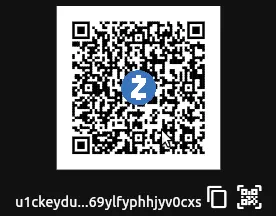
La prima cosa da notare è che la lunghezza di ciascun tipo di indirizzo è diversa. Puoi vederlo visivamente dal numero di caratteri della stringa dell'indirizzo oppure osservando i codici QR associati. Man mano che la lunghezza dell'indirizzo aumenta, il codice QR tende a rimpicciolire per inserire più dati nel quadrato.
t1goiSyw2JinFCmUnfiwwp72LEZzD42TyYu è lungo 35 caratterizs1cpf4prtmnqpg6x2ngcrwelu9a39z9l9lqukq9fwagnaqrknk34a7n3szwxpjuxfjdxkuzykel53 è lungo 78 caratteriu1ckeydud0996ftppqrnpdsqyeq4e57qcyjr4raht4dc8j3njuyj3gmm9yk7hq9k88cdkqfuqusgpcpjfhwu3plm2vrd32g8du78kzkm5un357r4vkhz4vhxd4yfl8zvszk99cmsc89qv4trd7jzkcs8h6lukzgy25j8cv76p0g603nrrg6yt6cxsh2v8rmkasskd69ylfyphhjyv0cxs è lungo 213 caratteriLa seconda cosa da notare è il prefisso di ogni stringa di indirizzo: gli indirizzi trasparenti iniziano con t, quelli sapling con zs e infine le UA con u1.
È importante notare:
Come discusso qui, si possono costruire UA con receiver diversi, ovvero una combinazione di tipi di indirizzi trasparenti, sapling e orchard. Oltre a una UA completa, ecco le combinazioni più comuni che incontrerai sul campo:
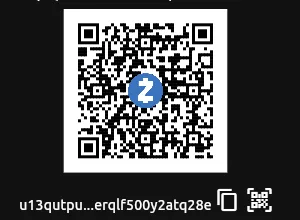
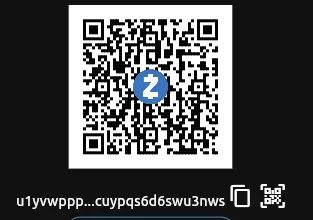
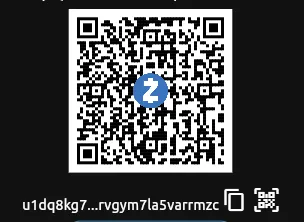
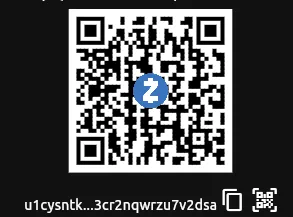
La prima cosa da notare è che ognuna di queste UA deriva dalla stessa chiave privata![Schermata di verifica in 2 passaggi]La seconda cosa da notare è la lunghezza di ciascun tipo di UA:
u13qutpuktq026dwczvxmnh8mxdacsjx3kg2rrhzgns8zsty53t9y0hqp5d440zc9w7z7zkkjqw8dq0uuc0mkt883464mq8mkys7l4xjnhylh7u3u02ukknurm5yxerqlf500y2atq28e 141 caratteriu1yvwppp7ann6n3pgkysdu0spvr50w4jf4jwgme3c8x8fp4av59rupgvdd3fddc3f2cwrk3ghs5lxt87ggj8cvjuzcrf4jkejwlu9pc83gk2vtx03ucqcc3ed0furcuypqs6d6swu3nws 141 caratteriu1dq8kg78fgpjsc7dn2ynpdzc8xu99wra0jec4jy30rjqk5frsj62qtgqcu9nn0j8g352phlwprshancgxcuhdcclx0wxtvqylhmuegas7ul8hwnwggy727l05pyujuywtnn4nkfznctaelpkcrqcm9cxhkgv3t9jtrvgym7la5varrmzc 178 caratteriu1cysntkxwt0h4sahp7rhj7u27pgc2ga7685ekf65g0d5ht5glkfm4zkumhvkd2zg2pdrgv3mrwq2x3vw2yl5u7zef3cr2nqwrzu7v2dsa 106 caratteriLa terza cosa da notare è che visivamente ogni UA è leggermente diversa![Schermata di verifica in 2 passaggi]Il punto di forza delle UA è la scelta che offrono agli utenti finali. Se in futuro sarà necessario un nuovo protocollo, le UA saranno pronte ad accoglierlo.
https://zcash.github.io/orchard/design/keys.html
https://medium.com/@hanh425/transaction-privacy-78f80f9f175e
Ironwood is the shielded pool activated by Network Upgrade 6.3 (NU6.3) on 28 July 2026, at block 3,428,143. It reuses the Orchard protocol and the same receiver structure, so the upgrade changed where shielded payments arrive without introducing a new address format. Ironwood is a pool, not a fourth type of address.
Status: Restricted
Status: Active
Migration depends on your wallet. Activation did not move any coins, and the sources reviewed give no migration deadline. Some wallets migrate automatically, some ask you to start a manual migration, and some have not added Ironwood support. The amount crossing from Orchard to Ironwood is public on the blockchain, while senders and recipients stay private.
In 2026, a critical soundness vulnerability was found in the original Orchard shielded pool and reported responsibly. It concerned the integrity of the money supply, not the confidentiality of shielded transaction data. The flaw was fixed in June 2026, and Ironwood was introduced as part of the network’s response. Here is what is, and is not, established:
A missing constraint in the Orchard proof circuit could, under certain conditions, have let an attacker create invalid shielded value without the proof system detecting it. It did not affect the privacy of funds in any pool.
Public technical reports state that no exploitation has been found or confirmed. A vulnerability that could permit counterfeiting is not evidence that counterfeiting occurred.
Shielded transactions hide amounts and notes by design, so a past exploit of this kind may leave no definitive on-chain evidence. That is why the risk cannot be conclusively ruled out from the chain alone.
Receivers and pools are different things. A unified address holds one receiver per protocol it supports. The Orchard pool is the legacy shielded pool described below; an Orchard receiver is the part of an address that Orchard-compatible wallets use to receive shielded funds. ZIP 316 defines no separate Ironwood receiver type: Ironwood is an Orchard-protocol pool, and ZIP 229 states that address structures and encodings do not change. Existing unified addresses, including the four combinations above, keep working, and an Orchard receiver can receive funds in the Ironwood pool. New payments to it are expected to arrive there, so an Orchard receiver does not by itself mean a payment lands in the original, now restricted, Orchard pool.
Based on ZIPs 229, 257, 258, 316 and 326, the Zcash Foundation’s NU6.2 announcement, Zodl’s Ironwood documentation and BlockSec’s technical analysis of the Orchard bug.
A new pool built on the corrected Orchard protocol, and a turnstile that stops the old pool from paying out more ZEC than verifiably entered it. This keeps total supply auditable whether or not everyone migrates.