Edit this page on GitHub (opens in a new tab)
Jika kamu baru pertama kali mempelajari Zcash, kamu akan segera menyadari bahwa ada dua jenis transaksi yang dapat terjadi: transparan dan terlindungi. Selain itu, jika kamu telah mengikuti perkembangan terbaru dalam ekosistem Zcash, kamu mungkin telah mempelajari tentang Alamat Terpadu, atau UA. Ketika orang-orang di industri Zcash berbicara tentang transaksi terlindungi, yang mereka maksud adalah transaksi yang melibatkan alamat yang dikodekan untuk protokol Sapling atau Orchard. UA dirancang untuk menyatukan setiap jenis transaksi terlindungi maupun transparan ke dalam satu alamat tunggal. Generalisasi ini adalah kunci untuk menyederhanakan UX di masa depan. Tujuan dari panduan ini adalah untuk melengkapi pemahaman tentang UA dengan contoh visual yang konkret.
Saat ini ada tiga jenis utama alamat yang digunakan hingga saat ini. Ini termasuk

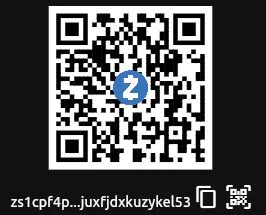
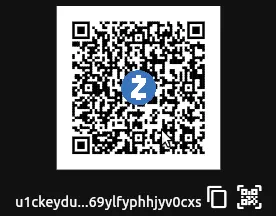
Hal pertama yang perlu diperhatikan adalah bagaimana panjang dari setiap jenis alamat berbeda satu sama lain. Kamu dapat melihat hal ini secara visual melalui jumlah karakter dalam string alamat atau dengan melihat kode QR terkait. Seiring bertambahnya panjang alamat, kode QR cenderung mengecil (zoom out) agar dapat memuat lebih banyak data ke dalam kotak tersebut.
t1goiSyw2JinFCmUnfiwwp72LEZzD42TyYu memiliki panjang 35 karakterzs1cpf4prtmnqpg6x2ngcrwelu9a39z9l9lqukq9fwagnaqrknk34a7n3szwxpjuxfjdxkuzykel53 memiliki panjang 78 karakteru1ckeydud0996ftppqrnpdsqyeq4e57qcyjr4raht4dc8j3njuyj3gmm9yk7hq9k88cdkqfuqusgpcpjfhwu3plm2vrd32g8du78kzkm5un357r4vkhz4vhxd4yfl8zvszk99cmsc89qv4trd7jzkcs8h6lukzgy25j8cv76p0g603nrrg6yt6cxsh2v8rmkasskd69ylfyphhjyv0cxs memiliki panjang 213 karakterHal kedua yang perlu diperhatikan adalah awalan dari setiap string alamat -- alamat transparan dimulai dengan t, Sapling dengan zs, dan terakhir UA dengan u1.
Penting untuk diperhatikan:
Seperti yang telah dibahas di sini seseorang dapat membangun UA dengan penerima yang berbeda -- beberapa kombinasi dari tipe alamat transparan, sapling, dan orchard. Selain UA lengkap, berikut adalah yang paling umum yang akan kamu temukan di lapangan:
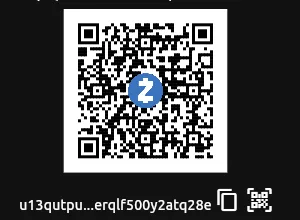
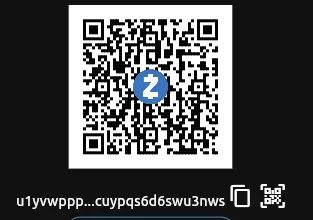
Hal pertama yang perlu diperhatikan adalah bahwa masing-masing UA ini berasal dari private key yang sama! Hal kedua yang perlu diperhatikan adalah panjang dari setiap jenis UA:
u13qutpuktq026dwczvxmnh8mxdacsjx3kg2rrhzgns8zsty53t9y0hqp5d440zc9w7z7zkkjqw8dq0uuc0mkt883464mq8mkys7l4xjnhylh7u3u02ukknurm5yxerqlf500y2atq28e 141 karakteru1yvwppp7ann6n3pgkysdu0spvr50w4jf4jwgme3c8x8fp4av59rupgvdd3fddc3f2cwrk3ghs5lxt87ggj8cvjuzcrf4jkejwlu9pc83gk2vtx03ucqcc3ed0furcuypqs6d6swu3nws 141 karakteru1dq8kg78fgpjsc7dn2ynpdzc8xu99wra0jec4jy30rjqk5frsj62qtgqcu9nn0j8g352phlwprshancgxcuhdcclx0wxtvqylhmuegas7ul8hwnwggy727l05pyujuywtnn4nkfznctaelpkcrqcm9cxhkgv3t9jtrvgym7la5varrmzc 178 karakteru1cysntkxwt0h4sahp7rhj7u27pgc2ga7685ekf65g0d5ht5glkfm4zkumhvkd2zg2pdrgv3mrwq2x3vw2yl5u7zef3cr2nqwrzu7v2dsa 106 karakterHal ketiga yang perlu diperhatikan adalah bagaimana secara visual setiap UA sedikit berbeda! Kekuatan dari UA adalah pilihan yang mereka berikan bagi pengguna akhir. Jika di masa depan diperlukan protokol baru, UA akan siap untuk digunakan.
https://zcash.github.io/orchard/design/keys.html
https://medium.com/@hanh425/transaction-privacy-78f80f9f175e
Ironwood is the shielded pool activated by Network Upgrade 6.3 (NU6.3) on 28 July 2026, at block 3,428,143. It reuses the Orchard protocol and the same receiver structure, so the upgrade changed where shielded payments arrive without introducing a new address format. Ironwood is a pool, not a fourth type of address.
Status: Restricted
Status: Active
Migration depends on your wallet. Activation did not move any coins, and the sources reviewed give no migration deadline. Some wallets migrate automatically, some ask you to start a manual migration, and some have not added Ironwood support. The amount crossing from Orchard to Ironwood is public on the blockchain, while senders and recipients stay private.
In 2026, a critical soundness vulnerability was found in the original Orchard shielded pool and reported responsibly. It concerned the integrity of the money supply, not the confidentiality of shielded transaction data. The flaw was fixed in June 2026, and Ironwood was introduced as part of the network’s response. Here is what is, and is not, established:
A missing constraint in the Orchard proof circuit could, under certain conditions, have let an attacker create invalid shielded value without the proof system detecting it. It did not affect the privacy of funds in any pool.
Public technical reports state that no exploitation has been found or confirmed. A vulnerability that could permit counterfeiting is not evidence that counterfeiting occurred.
Shielded transactions hide amounts and notes by design, so a past exploit of this kind may leave no definitive on-chain evidence. That is why the risk cannot be conclusively ruled out from the chain alone.
Receivers and pools are different things. A unified address holds one receiver per protocol it supports. The Orchard pool is the legacy shielded pool described below; an Orchard receiver is the part of an address that Orchard-compatible wallets use to receive shielded funds. ZIP 316 defines no separate Ironwood receiver type: Ironwood is an Orchard-protocol pool, and ZIP 229 states that address structures and encodings do not change. Existing unified addresses, including the four combinations above, keep working, and an Orchard receiver can receive funds in the Ironwood pool. New payments to it are expected to arrive there, so an Orchard receiver does not by itself mean a payment lands in the original, now restricted, Orchard pool.
Based on ZIPs 229, 257, 258, 316 and 326, the Zcash Foundation’s NU6.2 announcement, Zodl’s Ironwood documentation and BlockSec’s technical analysis of the Orchard bug.
A new pool built on the corrected Orchard protocol, and a turnstile that stops the old pool from paying out more ZEC than verifiably entered it. This keeps total supply auditable whether or not everyone migrates.