Edit this page on GitHub (opens in a new tab)
Wenn du dich zum ersten Mal mit Zcash beschäftigst, wirst du sofort feststellen, dass es zwei Arten von Transaktionen gibt, die stattfinden können: transparent und shielded. Außerdem hast du, wenn du die neuesten Entwicklungen im Zcash-Ökosystem verfolgt hast, vielleicht schon von Unified Addresses oder UA's gehört. Wenn Menschen in der Zcash-Branche von shielded Transaktionen sprechen, meinen sie Transaktionen, an denen Adressen beteiligt sind, die entweder für die sapling- oder orchard-Protokolle codiert sind. UA's wurden entwickelt, um jede Art von shielded oder transparenten Transaktionen in einer einzigen Adresse zu vereinen. Diese Verallgemeinerung ist der Schlüssel dazu, die UX in Zukunft zu vereinfachen. Der Zweck dieses Leitfadens ist es, das Verständnis von UA's mit konkreten visuellen Beispielen zu ergänzen.
Derzeit sind bis heute drei Haupttypen von Adressen in Gebrauch. Dazu gehören

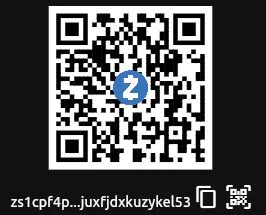
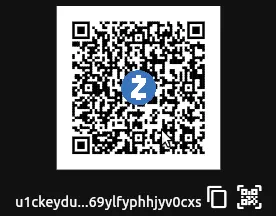
Als Erstes fällt auf, dass die Länge jedes Adresstyps unterschiedlich ist. Du kannst das visuell an der Anzahl der Zeichen in der Adresszeichenfolge oder anhand der zugehörigen QR-Codes erkennen. Je länger die Adresse ist, desto weiter zoomt der QR-Code tendenziell heraus, um mehr Daten im Quadrat unterzubringen.
t1goiSyw2JinFCmUnfiwwp72LEZzD42TyYu ist 35 Zeichen langzs1cpf4prtmnqpg6x2ngcrwelu9a39z9l9lqukq9fwagnaqrknk34a7n3szwxpjuxfjdxkuzykel53 ist 78 Zeichen langu1ckeydud0996ftppqrnpdsqyeq4e57qcyjr4raht4dc8j3njuyj3gmm9yk7hq9k88cdkqfuqusgpcpjfhwu3plm2vrd32g8du78kzkm5un357r4vkhz4vhxd4yfl8zvszk99cmsc89qv4trd7jzkcs8h6lukzgy25j8cv76p0g603nrrg6yt6cxsh2v8rmkasskd69ylfyphhjyv0cxs ist 213 Zeichen langAls Zweites fällt das Präfix jeder Adresszeichenfolge auf -- transparente Adressen beginnen mit einem t, sapling mit einem zs und schließlich UA's mit u1.
Wichtig ist dabei:
Wie hier besprochen, kann man UA's mit unterschiedlichen Empfängern erstellen -- also mit einer Kombination aus transparent-, sapling- und orchard-Adresstypen. Neben einer vollständigen UA sind dies die häufigsten Varianten, die du in freier Wildbahn finden wirst:
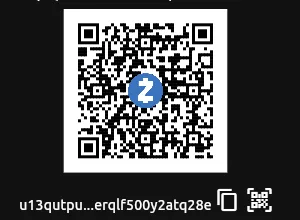
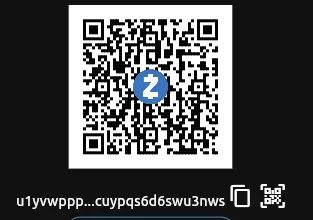
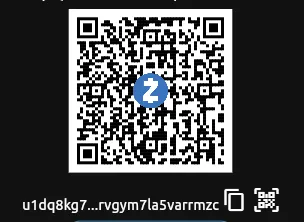
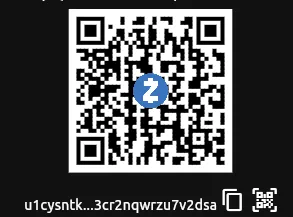
Als Erstes ist zu beachten, dass all diese UA's vom selben privaten Schlüssel stammen! Als Zweites ist die Länge jedes UA-Typs zu beachten:
u13qutpuktq026dwczvxmnh8mxdacsjx3kg2rrhzgns8zsty53t9y0hqp5d440zc9w7z7zkkjqw8dq0uuc0mkt883464mq8mkys7l4xjnhylh7u3u02ukknurm5yxerqlf500y2atq28e 141 Zeichenu1yvwppp7ann6n3pgkysdu0spvr50w4jf4jwgme3c8x8fp4av59rupgvdd3fddc3f2cwrk3ghs5lxt87ggj8cvjuzcrf4jkejwlu9pc83gk2vtx03ucqcc3ed0furcuypqs6d6swu3nws 141 Zeichenu1dq8kg78fgpjsc7dn2ynpdzc8xu99wra0jec4jy30rjqk5frsj62qtgqcu9nn0j8g352phlwprshancgxcuhdcclx0wxtvqylhmuegas7ul8hwnwggy727l05pyujuywtnn4nkfznctaelpkcrqcm9cxhkgv3t9jtrvgym7la5varrmzc 178 Zeichenu1cysntkxwt0h4sahp7rhj7u27pgc2ga7685ekf65g0d5ht5glkfm4zkumhvkd2zg2pdrgv3mrwq2x3vw2yl5u7zef3cr2nqwrzu7v2dsa 106 ZeichenAls Drittes ist zu beachten, dass jede dieser UA's visuell leicht unterschiedlich ist! Die Stärke von UA's ist die Wahlfreiheit, die sie den Endnutzern ermöglichen. Falls in Zukunft ein neues Protokoll benötigt wird, sind UA's dafür bereit.
https://zcash.github.io/orchard/design/keys.html
https://medium.com/@hanh425/transaction-privacy-78f80f9f175e
Ironwood is the shielded pool activated by Network Upgrade 6.3 (NU6.3) on 28 July 2026, at block 3,428,143. It reuses the Orchard protocol and the same receiver structure, so the upgrade changed where shielded payments arrive without introducing a new address format. Ironwood is a pool, not a fourth type of address.
Status: Restricted
Status: Active
Migration depends on your wallet. Activation did not move any coins, and the sources reviewed give no migration deadline. Some wallets migrate automatically, some ask you to start a manual migration, and some have not added Ironwood support. The amount crossing from Orchard to Ironwood is public on the blockchain, while senders and recipients stay private.
In 2026, a critical soundness vulnerability was found in the original Orchard shielded pool and reported responsibly. It concerned the integrity of the money supply, not the confidentiality of shielded transaction data. The flaw was fixed in June 2026, and Ironwood was introduced as part of the network’s response. Here is what is, and is not, established:
A missing constraint in the Orchard proof circuit could, under certain conditions, have let an attacker create invalid shielded value without the proof system detecting it. It did not affect the privacy of funds in any pool.
Public technical reports state that no exploitation has been found or confirmed. A vulnerability that could permit counterfeiting is not evidence that counterfeiting occurred.
Shielded transactions hide amounts and notes by design, so a past exploit of this kind may leave no definitive on-chain evidence. That is why the risk cannot be conclusively ruled out from the chain alone.
Receivers and pools are different things. A unified address holds one receiver per protocol it supports. The Orchard pool is the legacy shielded pool described below; an Orchard receiver is the part of an address that Orchard-compatible wallets use to receive shielded funds. ZIP 316 defines no separate Ironwood receiver type: Ironwood is an Orchard-protocol pool, and ZIP 229 states that address structures and encodings do not change. Existing unified addresses, including the four combinations above, keep working, and an Orchard receiver can receive funds in the Ironwood pool. New payments to it are expected to arrive there, so an Orchard receiver does not by itself mean a payment lands in the original, now restricted, Orchard pool.
Based on ZIPs 229, 257, 258, 316 and 326, the Zcash Foundation’s NU6.2 announcement, Zodl’s Ironwood documentation and BlockSec’s technical analysis of the Orchard bug.
A new pool built on the corrected Orchard protocol, and a turnstile that stops the old pool from paying out more ZEC than verifiably entered it. This keeps total supply auditable whether or not everyone migrates.