Loading...


Series: Zcash from First Principles . Article 0. The Anchor (Àdàkọ:Àwọn Àpilẹ̀kọ Àkọ́kọ́) àwọn tó ṣẹ̀ṣẹ̀ dé pátápátá. kò sí ẹ̀kọ́ nípa kíkọ̀ǹpútà, kò sí ohun tó jẹ mọ́ lílo ẹ̀rọ blockchain, kò sì sí ìmọ̀ ìṣirò tí wọ́n gbà gbọ́. What you'll leave with: a correct mental model of how Zcash hides who paid whom, and how much, while still letting the whole world verify that no money was forged or spent twice.
gbogbo àpilẹ̀kọ tó tẹ̀ lé e nínú àtẹ̀jáde yìí máa ń gbé apá kan nínú ẹ̀rọ tí ẹ̀yin yóò pàdé, nítorí náà bí ọ̀rọ̀ kan bá dà bí ẹni pé ọwọ́ ń mì níbí, ó dára. èyí jẹ́ ìlérí pé a ó padà wá, a ó sì gba owó náà bó ṣe yẹ.
Imagine your bank statement were nailed to a wall in the town square. Forever. Anyone (your landlord, your employer, a stranger, a future employer, a government) could read every rent payment, every medical bill, every donation, every coffee, and trace exactly who you sent money to and who sent money to you.
Ìyẹn kì í ṣe àròsọ tí kò dára. Bí Bitcoin ṣe ń ṣiṣẹ́ nìyẹn.
Bitcoin is often called "anonymous," but it isn't. It's pseudonymous: your name isn't on the ledger, but every transaction, amount, and link between addresses is public and permanent. The entire field of "chain analysis" exists to peel back that thin pseudonym and tie addresses to real people. Once one of your addresses is linked to you, your financial history unspools.
A ṣe Zcash lati dahun ibeere ti o nira pupọ:
Ǹjẹ́ a lè ní owó tó jẹ́ àṣírí pátápátá, tí ó fi ẹni tó rán an, ẹni tó gbà á, àti iye owó náà pamọ́, nígbà tí ó ṣì jẹ́ kí ẹnikẹ́ni rí i pé a tẹ̀lé àwọn òfin?
Those two goals fight each other. A public ledger is verifiable because everyone can see it. Privacy means nobody can see it. So how can the public verify something it isn't allowed to look at?
Ìdáhùn sí àríyànjiyàn yìí ni gbogbo ìtàn nínú ìsọ̀rí yìí. Ẹ jẹ́ ká bẹ̀rẹ̀.
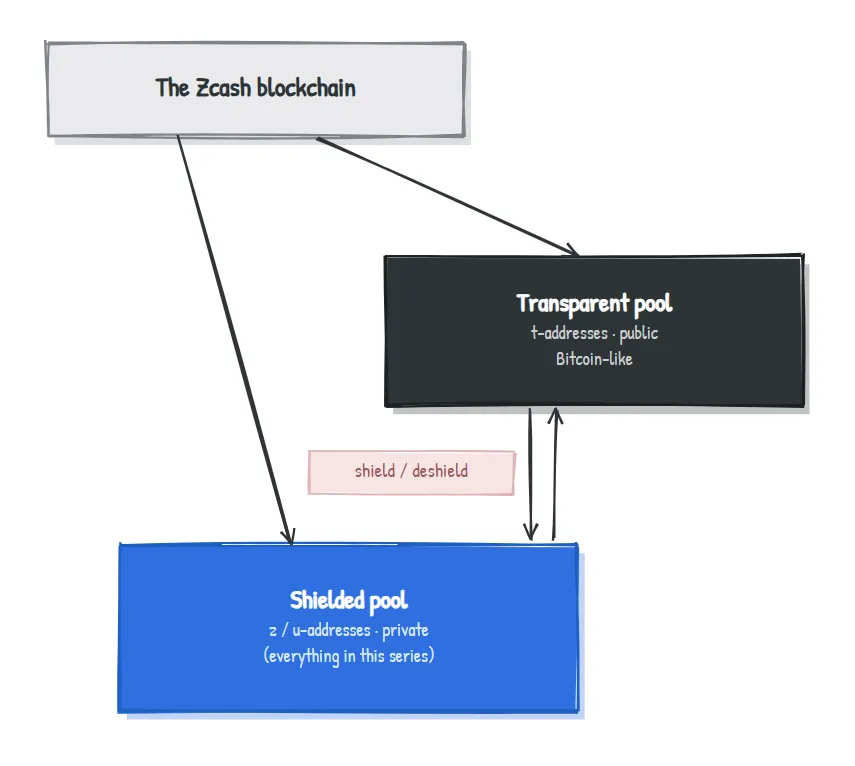
Before anything else, clear up a common misconception: Zcash is not "the private coin." It's a coin that offers privacy as an option. It actually started life as a fork of Bitcoin, and it carries two parallel systems on the same blockchain.
| Ayé tí ó ṣe kedere | Ayé tí a fi ààbò pamọ́ | |
|---|---|---|
| Ìpamọ́ | Gbogbo eniyan, gẹgẹ bi Bitcoin | Ikọkọ |
| Àwọn àdírẹ́sì bẹ̀rẹ̀ pẹ̀lú | t... | z... or u... |
| Olùránṣẹ́ / olùgbà / iye | Ó hàn sí gbogbo ènìyàn | Fipamọ́ kúrò lọ́wọ́ gbogbo ènìyàn |
| Ìmọ̀-ẹ̀rọ ìpìlẹ̀ | ledger gbogbogbòò ti ara Bitcoin | Àwọn ìlérí ìkọ̀kọ̀ + ẹ̀rí àìmọ̀ |
Owó pàápàá lè kọjá ààlà láàárín wọn: fífi owó * sínú* ayé tí wọ́n ń dáàbò bò ni a ń pè ní * dídáàbò bo, kíkó wọn padà síbi tó wà ni * ṣíṣídí ààbò kúrò.
The transparent world is "Bitcoin you already roughly understand." It's the shielded world that contains all the beautiful cryptography, and that's the only world this series cares about.
Èyí ni àwòrán kan ṣoṣo tó máa wà lọ́kàn rẹ láti máa lò nínú àpilẹ̀kọ tó kù.
Fojú inú wo àtẹ ìsọfúnni ńlá kan tí gbogbo èèyàn tó wà lórí ilẹ̀ ayé lè rí nígbà gbogbo.
Receiving money means someone pins a sealed, opaque envelope to the board. Inside the envelope is how much money it holds and a secret that only the recipient can read, because the envelope is locked to that recipient's personal key. The whole world sees that an envelope appeared. Nobody but the owner can see what's inside.
** Àpótí náà kì í ṣá.** A kì í já àpòòwé lulẹ̀ tàbí kí a pa á rẹ́. A máa ń fi àwọn tuntun sí i, títí láé.
Spending money means stepping behind a curtain, proving "I own one of the unspent envelopes on this board, and I'm allowed to open it", then dropping a unique void token into a public "spent" bin and pinning new envelopes for whoever you're paying.
Ààtò kékeré náà (fi ẹyọ owó kan tí kò sí sí, fi àpò ìwé tuntun sí, gbogbo rẹ̀ láti ẹ̀yìn aṣọ ìkélé) ni ìsanwó Zcash. Gbogbo nǹkan yòókù jẹ́ àlàyé.
Ní báyìí, ẹ jẹ́ ká pe àwọn ohun ìṣeré náà ní orúkọ wọn gan-an.
Àwọn ọ̀rọ̀ márùn-ún wọ̀nyí ni gbogbo àwọn ọ̀rọ̀ tí ó wà nínú Zcash tí a fi ààbò ṣe. Ẹ kọ́ wọn gẹ́gẹ́ bí ìtàn, kì í ṣe gẹ́gẹ́ bí ìwé atúmọ̀ èdè, wọn yóò sì dì mọ́ ọn.
| Nínú ìtàn náà | Àkókò Zcash gidi | Ohun tí ó jẹ́ gan-an |
|---|---|---|
| Àwọn ohun tó wà nínú àpòòwé náà (iye + ẹni tó ni ín + àṣírí kan) | Àkíyèsí | “Owó ẹyọ ara ẹni”: iye owó tí ó jẹ́ ti ẹnìkan |
| Àpò ìwé tí a ti dì, tí kò sì ní ìbòjú tí ó wà lórí pátákó náà | Ṣe akiyesi ifaramo | Èdìdì ìkọ̀kọ̀ kan tí ó ń fi hàn pé àpòòwé kan wà nígbà tí ó ń fi ohun tí ó wà nínú rẹ̀ pamọ́ |
| Pátákó ìwé ìròyìn fúnra rẹ̀ | Ṣe akiyesi igi ifaramo | Àkọsílẹ̀ àfikún-nìkan ti gbogbo àkọsílẹ̀ tí a tíì ṣẹ̀dá |
| Àmì òfo nínú àpótí "sókò" | Ohun tí kò ní jẹ́ kí ó bàjẹ́ | Àmì àrà ọ̀tọ̀ kan tí ó túmọ̀ sí "a ti ná owó yìí tán báyìí" |
| Ìdán "lẹ́yìn aṣọ ìkélé" | Ẹ̀rí ìmọ̀ òdo | Ẹ̀rí kan pé gbogbo owó tí a ná náà jẹ́ òótọ́, kò sì fi hàn pé kò sí nínú rẹ̀ |
Bí o kò bá rántí nǹkan mìíràn nínú àpilẹ̀kọ yìí, rántí tábìlì yìí. Gbogbo ohun tó tẹ̀ lé e ni ìdí tí ó fi jẹ́ pé ọ̀kọ̀ọ̀kan àwọn nkan náà ní láti ní ìrísí bó ṣe rí.
Èyí ni apá tí ọ̀pọ̀lọpọ̀ àwọn tó ń ṣàlàyé fi sílẹ̀, ó sì jẹ́ apá tí ó yàtọ̀ "Mo há àwọn ọ̀rọ̀ kan sórí" sí "Mo lóye ìpilẹ̀ṣẹ̀ náà". Ẹyọ kọ̀ọ̀kan nínú àwọn apá márùn-ún náà wà láti yanjú ìṣòro kan pàtó.
An ordinary envelope can be steamed open. A cryptographic note commitment cannot. Think of it as a magically sealed, fully opaque envelope with two superpowers:
báwo ni èdìdì ṣe lè ṣe àwọn nǹkan méjèèjì lẹ́ẹ̀kan náà? èyí jẹ́ ìbéèrè gidi kan tí a sì lè dáhùn. ó jẹ́ kókó ọ̀rọ̀ nínú *àpilẹ̀kọ kẹta (ìpinnu) * fún àkókò yìí, gba àpò ìwé náà gẹ́gẹ́ bí òrìṣà kí o sì máa bá ìrìn rẹ̀ lọ.
When you spend a note, you publish its nullifier, the "void token." This token is computed from the note itself and your secret key. That recipe buys three properties simultaneously, and each one matters:
Ohun-ini kẹta jẹ ọkàn ìpamọ Zcash, ati pe o yẹ fun apakan tirẹ ni isalẹ.
Ohun gbogbo n ṣẹlẹ lẹyin ideri, ati pe ohun ti o fi fun agbaye lẹhin naa jẹ ẹri-aini-imọ, iru iwe-ẹri ti ko ni idaniloju. O jẹri ni ipalọlọ si gbogbo eyi ni ẹẹkan:
The miracle is that the proof reveals none of those facts. Not the amount, not the addresses, not which envelope. It only convinces you that every statement above is true. How that's even possible is Article 5 (zero-knowledge proofs), the crescendo of the series.
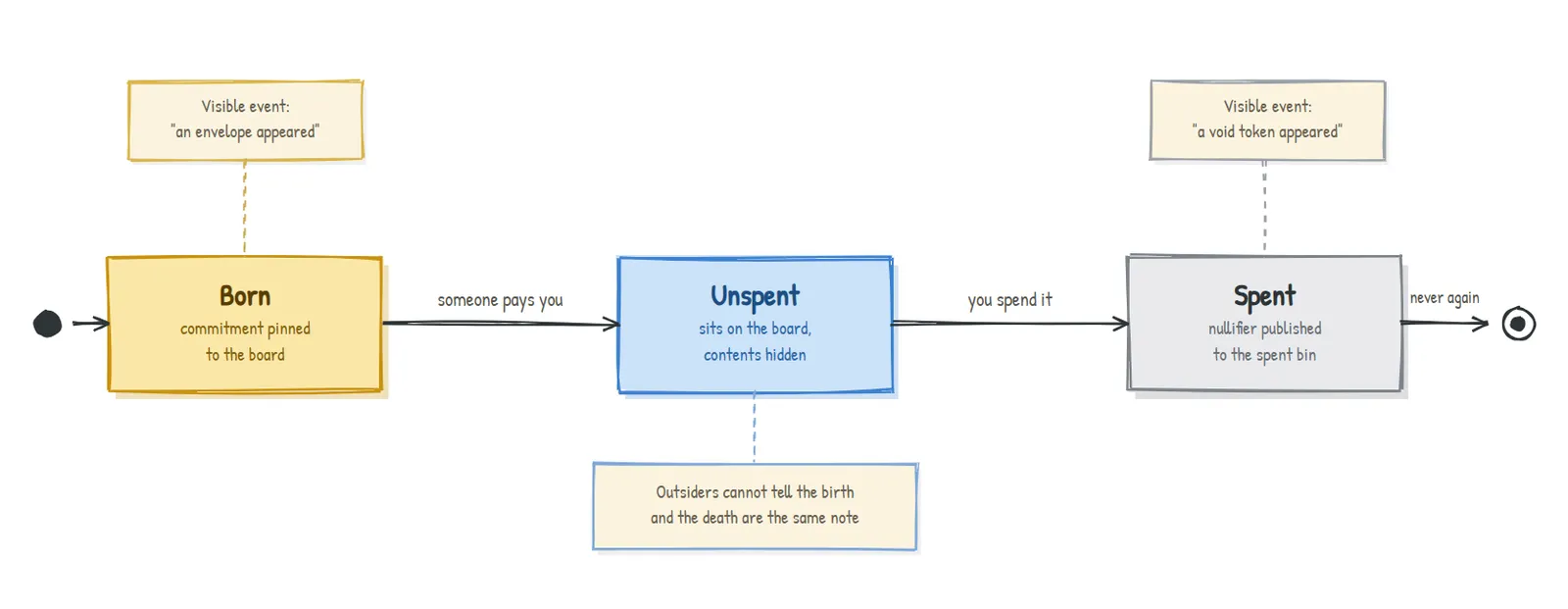
A note is born, it lives on the board, and eventually it dies, and crucially, its birth and its death look unrelated to anyone watching.
Ẹ jẹ́ ká wo bí Alice ṣe ń sanwó fún Bob, tí gbogbo ìgbésẹ̀ tó bá gbé ní gbangba àti ní ìkọ̀kọ̀ á sì wà lákọsílẹ̀.
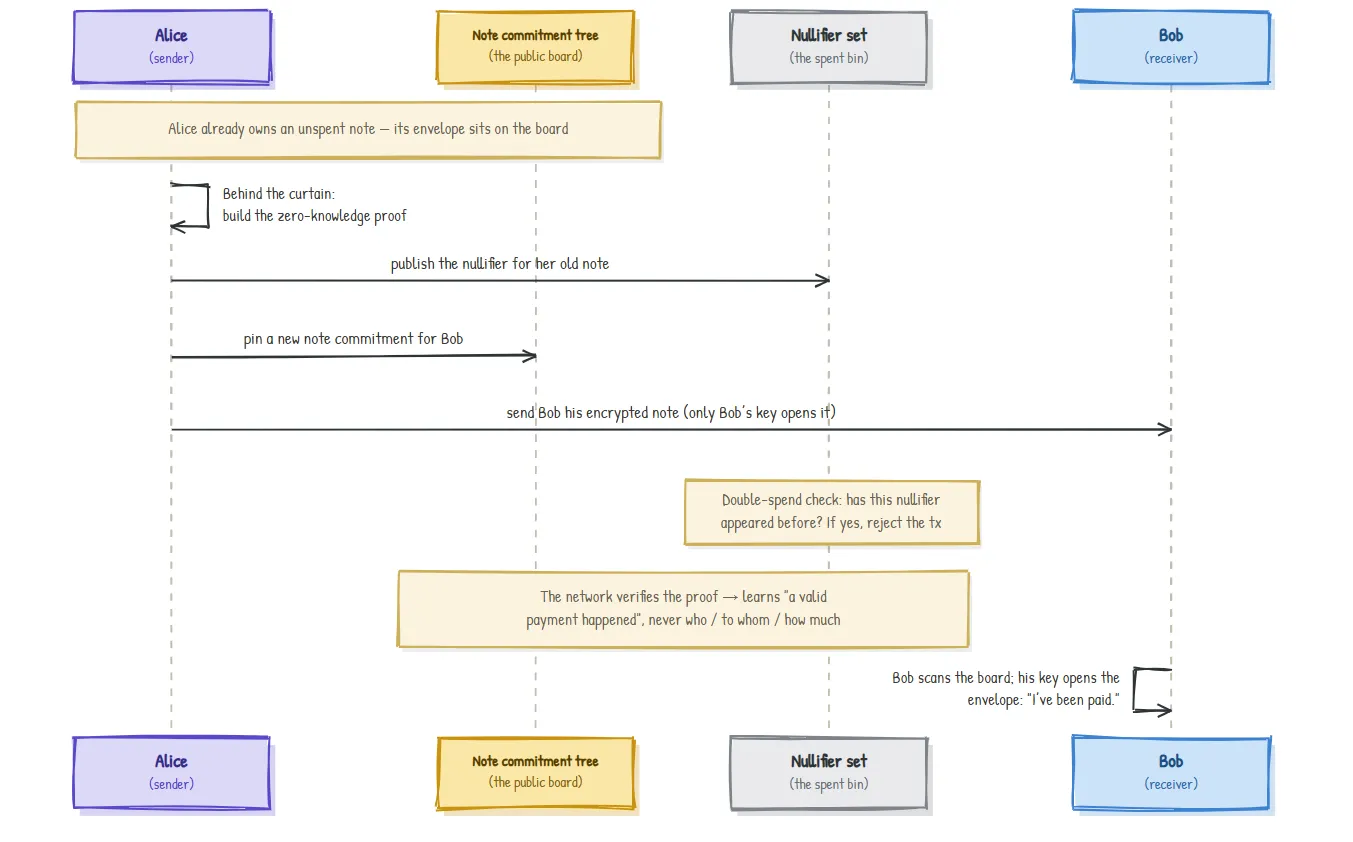
Kíyèsí àìṣedéédé tí ó mú kí ìpamọ́ ṣiṣẹ́:
báwo ni bob ṣe mọ̀ pé wọ́n sanwó fún un? àkọsílẹ̀ rẹ̀ wà ní ìkọ̀rọ̀ sí kókó rẹ̀. ó ń ṣàyẹ̀wò pẹpẹ náà láìdáwọ́ dúró, kìkì àpòòwé rẹ̀ nìkan ló sì ń ṣí sílẹ̀ fún un, bí ẹni pé kókó kan ṣoṣo ló wà tó bá àwọn ìlẹ̀kùn kan pàtó mu. ohun tó wà lẹ́yìn èyí ni wíwo àwọn kókó, ọ̀ràn tí a ó jíròrò lẹ́hìn-ín.
| Otitọ nipa isanwo naa | Ṣe gbogbo eniyan le ri i? |
|---|---|
| Ìṣòwò ààbò kan wáyé | Bẹ́ẹ̀ni |
| Pe o tẹle gbogbo awọn ofin (ko si ayederu, ko si inawo meji) | Bẹẹni (nipasẹ ẹri) |
| Ta fi owó náà ránṣẹ́ | Fi pamọ́ |
| Ta ló gbà á | Fi pamọ́ |
| Elo ni ti a fi ranṣẹ | Fi pamọ́ |
| **Èyí tí a ti lo àkọsílẹ̀ tẹ́lẹ̀ | Fi pamọ́ |
Eyi ni ipinnu ti iyatọ lati Abala 1. Awọn eniyan ṣayẹwo awọn * ofin *, kii ṣe awọn * akoonu *. Ṣayẹwo ati asiri da ija duro, nitori ẹri-imọ-noleri jẹ ki o ṣayẹyẹ iṣaaju laisi ifọwọkan igbehin.
Bí ẹ bá lóye èrò yìí, ẹ óo mọ ìdí tí Zcash fi jẹ́ àdáni. Ẹ ka ọ̀rọ̀ náà pẹ̀lẹ́.
So an outside observer sees a stream of envelopes appearing and a stream of void tokens appearing, but cannot match them up. They can't say "the void token dropped today corresponds to the envelope pinned last March." The link exists only inside the secret knowledge of the note's owner, and the zero-knowledge proof confirms the link is valid without revealing it.
Ìjápọ̀ tí kò bá dúró yìí ni àwọn iléeṣẹ́ tó ń ṣàyẹ̀wò ìsọfúnni lórí Bitcoin máa ń fi ṣe àjẹkì, ohun tí Zcash sì mọ̀ọ́mọ̀ fi ń gé.
Ìdánwò ẹ̀rí ọkàn rẹ: Bí a bá ṣe àtúnyẹ̀wò àwọn ohun tí ó jẹ́ òfo ní àyàfi láti inú àkọsílẹ̀ náà (kò sí kókó ìkọ̀kọ̀), èwo nínú àwọn ohun-ìní mẹ́ta tó wà nínú Abala 5 ni yóò rú, kí sì nìdí tí èyí yóò fi pa àṣírí ẹni run?
This is a mental model, not the spec. To keep it newcomer-friendly we've quietly simplified several real things: Zcash has had multiple shielded designs (Sprout, then Sapling, now Orchard); real transactions can spend and create several notes at once; "the board" is technically a specific kind of tree, not a literal pinboard; and value balance is enforced with some additional cryptographic bookkeeping. None of those details change the story you just learned; they refine it. We'll add the precision back, one article at a time, and flag clearly whenever we do.
Àwọn ìsọfúnni tó dára nípa ẹ̀kọ́ máa ń jẹ́ kí àwọn èèyàn fọkàn tán ọ nípa sísọ ohun tí wọ́n fi sílẹ̀.
Gbogbo "a ó padà wá sí èyí" lókè yìí jẹ́ ìjápọ̀ kan.
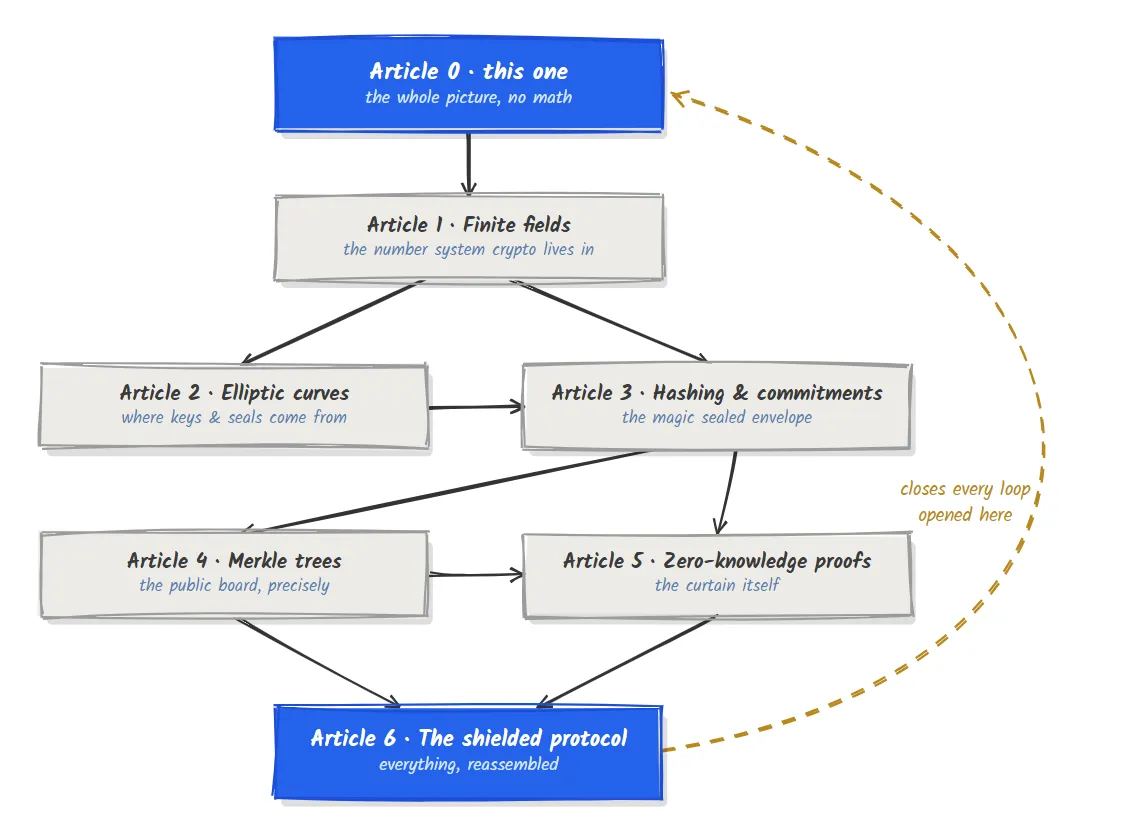
| Ìròyìn dídùn láti inú àpilẹ̀kọ yìí | Ibi tí a ti ṣe ìpinnu rẹ̀ |
|---|---|
| Báwo ni àpò ìwé tí a fi èdìdì dì ṣe lè fara pamọ́ àti tí kò ṣeé bàjẹ́? | Àpilẹ̀kọ 3: àwọn ìlérí |
| Nibo ni awọn bọtini ati awọn ilana ikoko ti wa? | Àpilẹ̀kọ 1 àti 2: àwọn pápá àti àwọn ìlà |
| Kí ni ìyẹn "àwòrán náà," gan-an? | Àpilẹ̀kọ 4: Àwọn igi Merkle |
| Báwo lo ṣe lè fi hàn pé ohun kan jẹ́ òótọ́ láìsí pé o kò fi ohunkóhun hàn? | Àpilẹ̀kọ 5: Àwọn ẹ̀rí àìmọ̀ |
| Báwo ni gbogbo àwọn nǹkan márùn-ún ṣe ń para pọ̀ ní Zcash? | Àpilẹ̀kọ 6: ìlànà tí a dáàbò bò |
Ìwọ lo máa di àwòrán ilẹ̀ náà mú, àwọn tó kù nínú ìsọ̀rí náà á sì kún un.
| Àkókò ìgba | Ìtumọ̀ Gẹ̀ẹ́sì lásán |
|---|---|
| Note | Iye owo ikọkọ kan, ti o dọgba pẹlu Zcash's ti owo tabi iwe-owo kan |
| Note commitment | Èdìdì ìkọ̀kọ̀ kan tí ó fi hàn pé àkọsílẹ̀ kan wà láìsí pé ó ṣí i payá |
| Note commitment tree | Àkọsílẹ̀ gbogbogbò tí a fi kún un nìkan ti gbogbo ìlérí àkọsílẹ̀ |
| Nullifier | Àmì "ìnáwó" àrà ọ̀tọ̀ tí a tẹ̀ jáde nígbà tí a bá lo àkọsílẹ̀ kan, èyí tí ó ń dènà ìnáwó méjì |
| Zero-knowledge proof | Ẹ̀rí pé gbólóhùn kan jẹ́ òótọ́ nígbà tí kò fi ohunkóhun tí ó ju òótọ́ rẹ̀ lọ hàn |
| Shielding / deshielding | Gbigbe owo sinu / jade kuro ninu agbaye aabo ikọkọ |
| Viewing Key | Kọ́kọ́rọ́ tí ó jẹ́ kí ẹni tó ni ilé náà rí àti ka àwọn àkọsílẹ̀ tí a kọ sí wọn |
Ṣé gbogbo ìgbà ni Zcash máa ń jẹ́ àdáni?
Rárá. Ìpamọ́ ní í ṣe pẹ̀lú àgbáyé tí a fi ìbòjú bo (z.../u... àwọn adirẹsi).t...) àwọn ìsọfúnni náà máa ń wà lárọ̀ọ́wọ́tó gbogbo èèyàn bíi ti Bitcoin.
** Ti ohun gbogbo ba farapamọ, kini o da ẹnikan duro lati tẹ owo ọfẹ?** Àrídájú ìmọ̀ òfo. Ó ń fi ìṣirò mú kí gbogbo ohun tí wọ́n bá ṣe ní ìmúṣẹ láti ní ìtìlẹyìn àwọn ohun tó jẹ́ ojúlówó, tí wọn kò lò, nígbà tí ó ń pa iye owó náà mọ́.
*Ṣé a lè ná owó kan náà lẹ́ẹ̀mejì? Rárá o. Tí a bá lo nọ́ọ̀tì kan, ó máa mú kí ohun tó sọ pé kò wúlò jáde; tá a bá tún gbìyànjú èkejì, á mú kí irú ohun kan náà tí kò ní wúló jáde, èyí tó ti wà nínú àpótí tí wọ́n ń pè ní "spent" bin, nítorí náà, àkànlò náà á kọ ọ́.
Ǹjẹ́ àwọn àjèjì lè so ẹni tó ń ránṣẹ́ àti ẹni tó gbà á pọ̀? No. The commitment (note's birth) and the nullifier (note's death) can't be matched by anyone without the owner's secret knowledge.
If the nullifier were computed only from the note, with no secret key, then anyone could compute it, breaking property #1 (only the owner can spend). Worse, the nullifier would now be derivable straight from public information about the note, which could let observers link the nullifier back to its commitment, breaking property #3 and quietly unravelling the privacy of the whole system. The secret key is what makes the void token both exclusively yours and unlinkable.
Article 1 . Finite fields: the strange, beautiful number system where arithmetic "wraps around," and the reason every piece of cryptography in this series lives there. We'll start, as always, with intuition, no formulas until they're earned.