Loading...

! 
Series: Zcash site na First Principles . **Article 3 . Ndị na-ege ntị: ndị bịara ọhụrụ. Anyị na-ewulite na Nkeji edemede 1 (ogige ndị nwere njedebe) na Article 2 (elliptic curves), mana nghọta na-eguzo n'onwe ya. What you'll leave with: a clear understanding of hash functions, what "hiding" and "binding" really mean, and how Zcash builds the note commitments that anchor every private payment.
Na Nkeji edemede 0 we described a "magic sealed envelope": something you can pin to a public board that proves an envelope exists while hiding what's inside, and which you can never swap out later. We promised to explain how such a thing is possible. This is that article. We need two ingredients: hash functions and commitments.
Imagine you predict the outcome of an election and want to prove, afterwards, that you called it in advance. You can't just announce your prediction (that influences people, or invites accusations you changed it). And you can't keep it fully secret (then you can't prove anything later).
Ihe ị chọrọ bụ ụzọ iji kpọchie na uru ugbu a, n'ihu ọha, dị ka nke ahụ:
This "lock now, reveal later, no lying" gadget is called a commitment, and it is everywhere in Zcash. A note's value and owner are locked into a commitment the moment the note is created. To build commitments, we first need their workhorse: the hash function.
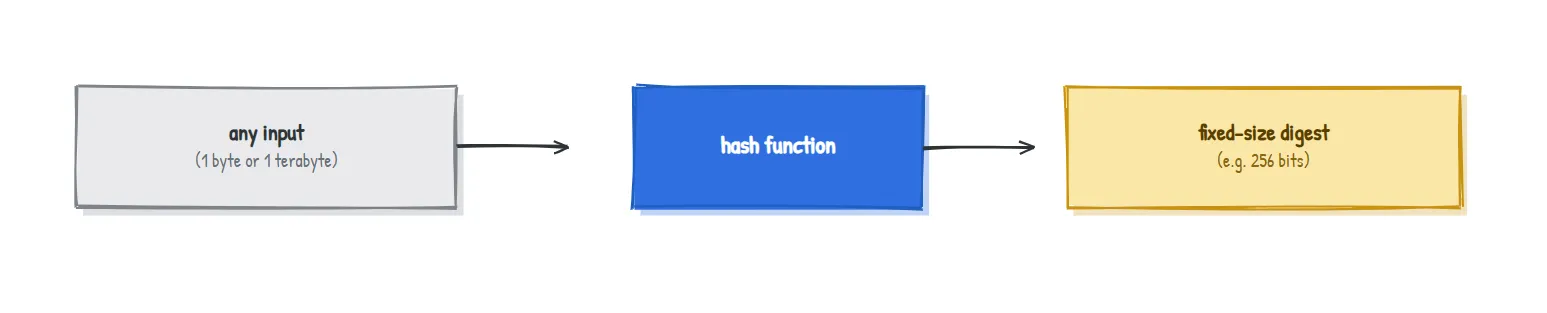
A hash function takes any data at all, a single letter or an entire library, and crushes it down to a short, fixed-size string called a digest or hash. Think of it as a fingerprint for data.
! 
Ezigbo mkpisiaka mkpisi aka nwere njirimara anọ. Were ha dịka ihe omimi, ọ bụghị nha anya:
| Akụ na ụba | Nkọwa doro anya | Ihe mere o ji dị mkpa |
|---|---|---|
| Dịka a kapịrị ọnụ | Otu ntinye ahụ na-enye otu akara mkpisi aka ahụ mgbe niile | Ị nwere ike ịlele mkpisi aka ọzọ oge ọ bụla |
| Ọsọ ọsọ ọsọ | Ịgbakọ akara mkpisiaka dị ngwa ngwa | A na-eji ya ebe niile |
| Otu ụzọ (na-eguzogide onyonyo mbụ) | Ebe ọ bụ na e nyere gị akara mkpịsị aka, ị gaghị ahụ ihe e tinyere na ya | Na-ezochi data mbụ |
| Na-eguzogide nkukọ | Ị gaghị ahụ ntinye abụọ dị iche iche nwere otu mkpisi aka | Ọ dịghị onye nwere ike inwe mmekọrịta |
Na omume ọzọ na-eme ka mkpịsị aka dị ka anwansi:
Change the input by the tiniest amount and the fingerprint changes completely, with no resemblance to the old one. Here are two real SHA-256 fingerprints of messages differing by a single character:
H("Pay Bob 5 ZEC") = 6e2dc1a954c70cc865f18ea8cb70b7b56eeaf6ca42b380824a55d65dc342f34b
H("Pay Bob 6 ZEC") = 76abc346d8d3053f76a9ae18b617af71f02729a73ec6a51732d2d94934e4217f
N'ime mkpụrụ edemede 64 hex, 59 dị iche. Otu mkpụrụedemede n'ime, akara mkpịsị aka na-enweghị ihe jikọrọ ya. Nke a bụ ihe mere na ịnweghị ike ịkwanye ntinye aka n'aka akara mkpisiaka: enweghị akara "ọkụ / oyi" ịgbaso.
Nke a bụ echiche na-adọrọ adọrọ ma mebie emebi: ịrara onwe gị nye ụkpụrụ nzuzo v, naanị bipụta akara mkpịsị aka ya H(v).
Nke a na-ejikọta gị nke ọma (ị gaghị enwe ike ikwu n'oge na-adịghị anya ihe dị iche v, because that would need a collision). But it fails to hide. If the set of possible values is small, an attacker just fingerprints every candidate and compares. Committing to "yes" or "no"? They hash both and instantly learn which you chose. Determinism, our friend a moment ago, is now leaking the secret.
Ihe ngwọta ya bụ otu okwu: randomness.
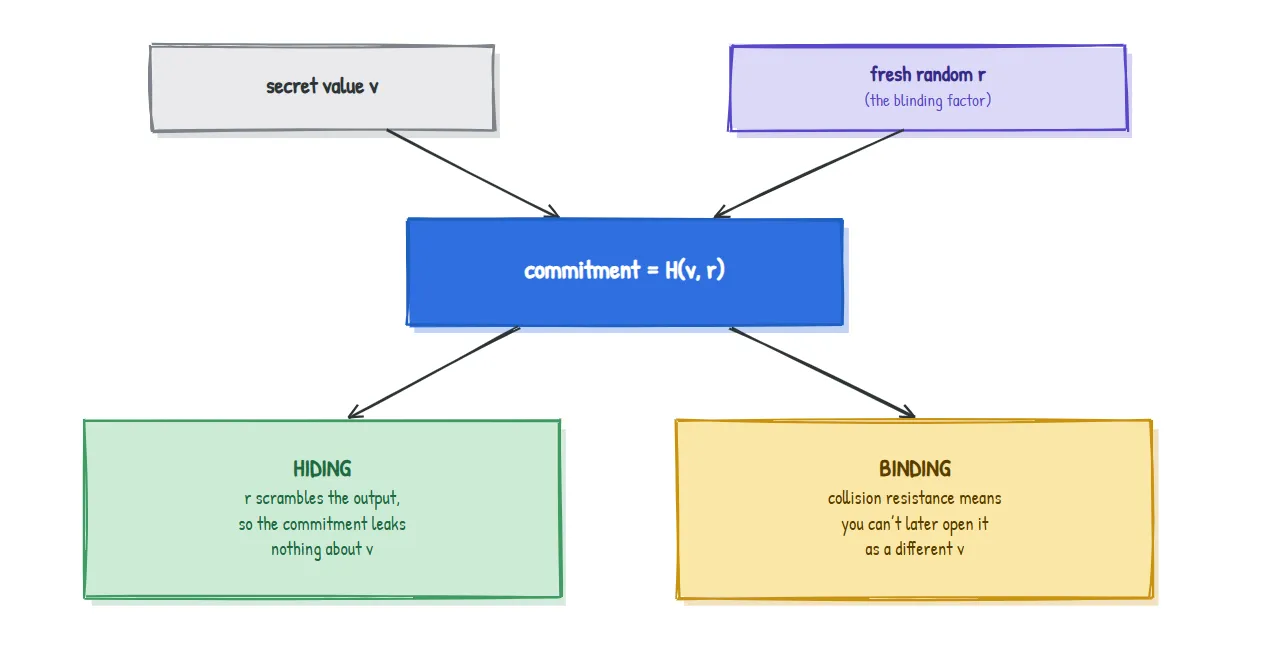
Nkwekọrịta bụ akara mkpịsị aka nke uru gị agwakọtara ya na ọnụọgụgụ ọhụrụ:
commitment = H(v, r)eberbụ ihe nzuzo na-enweghị ihe ọ bụla "na-ekpuchi" uru.
Ugbu a otu ihe ahụ v na-emepụta a dị iche iche na-achọ nkwa oge ọ bụla, n'ihi na r ihe abụọ anyị chọrọ n'ikpeazụ ma jide:
! 
Iji meghee (gosi) nkwa ahụ mgbe e mesịrị, ị na-ebipụta v na r; onye ọ bụla recalculates H(v, r) ọ na-enyocha ma ọ dabara. Ị kpọchiri gị. Nke ahụ bụ envelopu ahụ e ji anwansi mechie nke si n'Akwụkwọ 0, nke e mere ka ọ dị adị.
Two takeaways to carry forever: binding comes from the hash being collision resistant; hiding comes from the random blinding factor
r.
E nwere usoro abụọ a na-ahụkarị, Zcash na-ejikwa ha abụọ.
| Nkwa dabere na hash | Nkwa Pedersen (site na Isiokwu nke 2) | |
|---|---|---|
| Ntụziaka nri | H(v, r) | v.G + r.H (isi na mgbagọ) |
| Na-ezo site na | ihe na-enweghị usoro r | ihe na-enweghị usoro r |
| Njikọta site na | iguzogide nkukota | Ụzọ ọnyà nke nwere akụkụ elliptic-curve (ECDLP) |
| Ike pụrụ iche | dị mfe ma dị ngwa | nkwa ndị ahụ gbakọọ (homomorphic) |
Ahịrị ikpeazụ ahụ bụ ihe mere Pedersen ji eme ihe dị mkpa na Zcash. commit(v_1) + commit(v_2) bụ ezigbo commit(v_1 + v_2), the protocol can later prove that money in equals money out by adding commitments together, all without revealing a single amount. We're stockpiling that fact for Article 6.
Nke a bụ nghọta ọtụtụ mmeghe na-atụ uche, ọ bụkwa kpọmkwem "mgbakọ na mwepụ na-ezute injinịa" isi kwesịrị ịkọwapụta.
SHA-256 is a superb fingerprint for everyday computing. But Zcash doesn't just compute hashes; it has to prove, inside a zero-knowledge proof, that a hash was computed correctly (Article 5 explains why). And here's the catch: a zero-knowledge proof works in the language of finite-field arithmetic (Article 1), while SHA-256 is built from bit-twiddling operations (shifts, ANDs, XORs). Expressing all that bit-twiddling in field arithmetic is enormously expensive, making proofs huge and slow.
Ya mere, ndị na-emepụta Zcash chepụtara ọrụ hash nke dị n'ime ya bụ * ugbua * ubi arithmetic, na-eme ka ha dị ọnụ ala iji gosipụta:
! 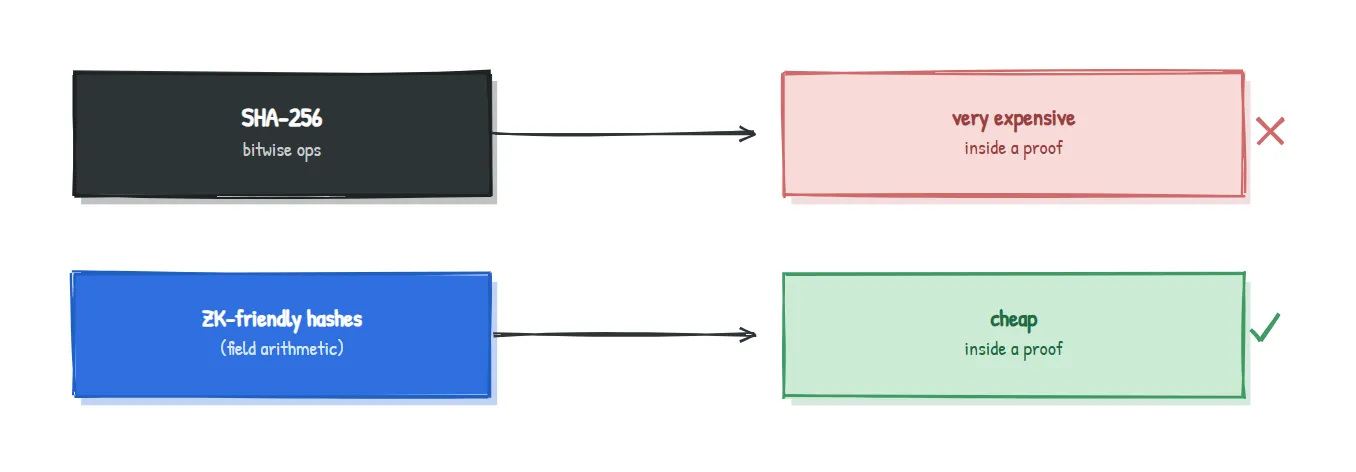
Nrụgide injinịa a, * "ọ ga-abụrịrị ọnụ ala iji gosipụta",* bụ ihe mere Zcash ji mepụta ma nakweere ọrụ hash pụrụ iche kama iru SHA-256 ebe niile.
Zcash ejirila hashes dị iche iche n'ime atụmatụ ya, nke ọ bụla ahọpụtara maka ọrụ ahụ:
| Nhazi | Ejiri hashes mee ihe | Ebee |
|---|---|---|
| Sprout (nke mbụ) | SHA-256 | Rịba ama nkwa na osisi ahụ |
| Sapling | Pedersen hashes, gbakwunyere BLAKE2 | Pedersen maka nkwa ndetu na osisi Merkle; BLAKE2 maka ihe ndị dị mkpa na ihe ndị na-emebi ihe |
| Orchard (ugbu a) | Sinsemilla, gbakwunyere Poseidon | Sinsemilla maka nkwa ndetu na osisi Merkle; Poseidon maka ihe na-emebi ihe, emebere ha niile maka sekit mgbakọ na mwepụ |
The names to recognize are Pedersen and Sinsemilla (commitment-style hashes built from curve points, so they inherit the "adds up" superpower and prove cheaply) and Poseidon (a field-arithmetic hash purpose-built for zero-knowledge circuits). When Article 0 said a note's contents are sealed into a commitment, this is the machinery doing the sealing.
So the open loop from Article 0, "how can a sealed envelope hide its contents yet be impossible to forge?", is now closed: hiding from a random blinding factor, binding from collision resistance or the curve trapdoor.
Anyị mere ka ihe dị mfe iji mee ka ihe doo anya. v na r are encoded and which generators are used; "hiding" and "binding" each come in flavours (perfect vs computational) with precise security definitions; and we didn't show the internals of Pedersen, Sinsemilla, or Poseidon. None of that changes the intuition: a commitment is a fingerprint plus randomness that hides now and binds forever. The details return, flagged, when the protocol article needs them.
H(v) na-ejikọ ma ọ dịghị ezobe. H(v, r), na-edozi na: r, na-ejikọta site na nkwụsị nkwụsị.**| Oge okwu | Nkọwa Bekee dị mfe |
|---|---|
| Hash function | Na-agweri data ọ bụla ka ọ bụrụ obere mkpịsị aka a kapịrị ọnụ (gbakọọ) |
| Digest | Mkpisiaka mmepụta nke ọrụ hash |
| Preimage resistance | Enweghị ike ịtụgharị nchịkọta azụ na ntinye ya (otu ụzọ) |
| Collision resistance | Enweghị ike ịchọta ntinye abụọ nwere otu nchịkọta akụkọ |
| Avalanche effect | Obere mgbanwe ntinye na-agbanwe mgbanwe ahụ kpamkpam |
| Commitment | Kpọchie uru ugbu a, kpughee ma emechaa, enweghị m ike ịgha ụgha gbasara ya |
Blinding factor (r) | Nọmba ọhụrụ a na-enweghị usoro nke na-ezochi nkwa |
| ZK-friendly hash | Hash e ji mgbakọ na mwepụ ubi rụọ, ya mere ọ dị ọnụ ala igosi |
Gịnị mere na ị gaghị ezochi uru ahụ kama itinye aka na ya? Encryption bụ ihe gbasara ihe nzuzo ị nwere ike ịkọwapụta mgbe e mesịrị. Nkwekorita bụ banyere ịkwado: nkwa na ị nweghị ike ịgbanwe azịza gị mgbe e mechara. Ọrụ dị iche iche.
** Ọ bụrụ na nkwa ndị ahụ na-ezochi uru ha bara, olee otú onye ọ bụla ga-esi nyochaa iwu ndị ahụ?** Nke ahụ bụ ọrụ nke ihe akaebe na-enweghị ihe ọmụma (Nkeji edemede 5): ha na-egosi uru zoro ezo na-erube isi n'iwu ahụ n'ekpugheghị ya.
** Ọ bụ SHA-256 mebiri emebi, ebe ọ bụ na Zcash na-ezere ya n'ebe ụfọdụ?** Mba. SHA-256 dị mma ma Zcash ka na-eji ya. Ọ dị oke ọnụ iji * gosipụta n'ime sekit, * nke bụ ihe mere ZK-enyi na enyi hashes ji dịrị maka ọrụ ahụ akọwapụtara.
Ebee ka random r si, na onye na-edebe ya?
A na-emepụta ya ọhụrụ mgbe edere akwụkwọ ahụ ma mara onye nwe akwụkwọ ahụ. Ọ bụ akụkụ nke ihe na-eme ka akwụkwọ ọ bụla dị iche na nkeonwe.
I kwenyere na amụma ntuliaka gị dịka H(v, r) Otu enyi gị na-ekwusi ike na ị ga-ebipụta ya naanị H(v) iji mee ka ọ dị mfe. N'otu ahịrịokwu, gịnị kpatara nke ahụ ji bụrụ echiche ọjọọ ma ọ bụrụ na enwere naanị nsonaazụ abụọ? * ((Zaa n'okpuru.) *
Site na naanị ihe abụọ, enyi gị nwere ike ịgbakọ H("win") na H("lose") onwe ha na-atụnyere megide gị bipụtara chịkọtara, ozugbo amụta gị amụma. r bụ ihe na-akwụsị a maa-na-elele agha.
Article 4 . Merkle trees: we now have millions of commitments piling up. Article 4 shows how Zcash organizes them into a single tree whose tiny root fingerprint stands in for the entire history, and how you can prove your note is in that tree without revealing which one. That's the real shape of Article 0's "public board."