Loading...

! 
Series: Zcash site na First Principles . **Article 2 . Ndị na-ege ntị: ndị bịara ọhụrụ. Anyị na-ewere naanị Nkeji edemede 1 (ubi nwere njedebe): mgbakọ na mwepụ nke na-ekpuchi gburugburu mod a. Ọ dịghị mkpa ihe ọzọ. What you'll leave with: an intuitive and correct picture of elliptic curves, the "trapdoor" that makes them useful, and exactly how Zcash turns them into keys and commitments.
Ihe nke 1 gave us a perfect playground for arithmetic: the finite field. But a field on its own is just numbers. To build keys and the "sealed envelopes" from Article 0, Zcash chọrọ ihe nwere nsogbu pụrụ iche, otu ụzọ siri ike: dị mfe iji gbakọọ n'ihu, ọ fọrọ nke nta ka ọ bụrụ ihe na-agaghị ekwe omume ịlaghachi azụ. Ihe ahụ bụ ** elliptic curve **. Isiokwu a na-ewu ya site na ala, nghọta tupu algebra.
Usoro nzuzo ọ bụla chọrọ okporo ámá nwere naanị otu ụzọ: ọrụ nke na-adịghị mkpa ịga n'ihu ma bụrụ nke a na-apụghị ịlaghachi azụ.
Here's why. Your secret key is a number you keep hidden. Your public key (and your address) is derived from it and shown to the world. The entire security of the system rests on one fact: given the public key, nobody can work backwards to your secret key. If they could, they could spend your money.
Ya mere, anyị chọrọ ọrụ mgbakọ na mwepụ ebe:
Plain finite-field multiplication isn't good enough; division undoes it instantly (that was the whole point of Article 1). We need something with no easy "undo" button. Elliptic curves provide exactly that, and as a bonus, their points combine in a way that's perfect for building commitments. Let's see how.
Echefu cryptography maka a oge. ** elliptic usoro ** bụ naanị set nke ihe (x, y) na-emeju otu nha nke ọdịdị:
y^2 = x^3 + ax + b
Over ordinary numbers it looks like a smooth, swooping curve, often with a rounded loop and two tails:
! 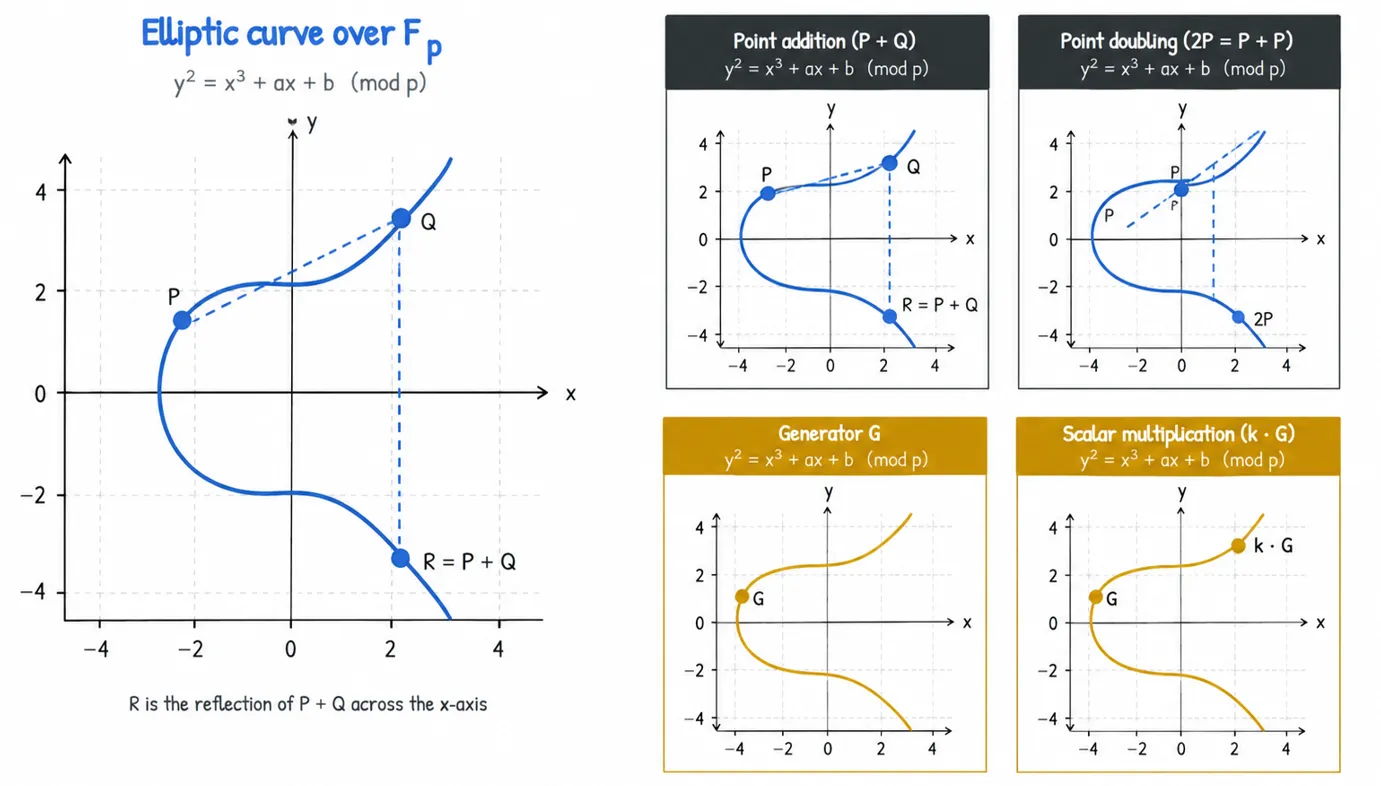
Ihe na-eju anya n'ezie: ** ị nwere ike "tinye" isi abụọ na usoro a iji nweta isi nke atọ na otu usoro ahụ.** Nke a abụghị mgbakwunye nke nhazi. Ọ bụ iwu geometric, ọ dịkwa mfe * ịhụ * karịa ikwu.
Iji gbakwunye P + Q:
P na Q.R*.R* n'ofe axis ahụ.** Ntụgharị uche ahụ bụ azịza ya, P + Q.! 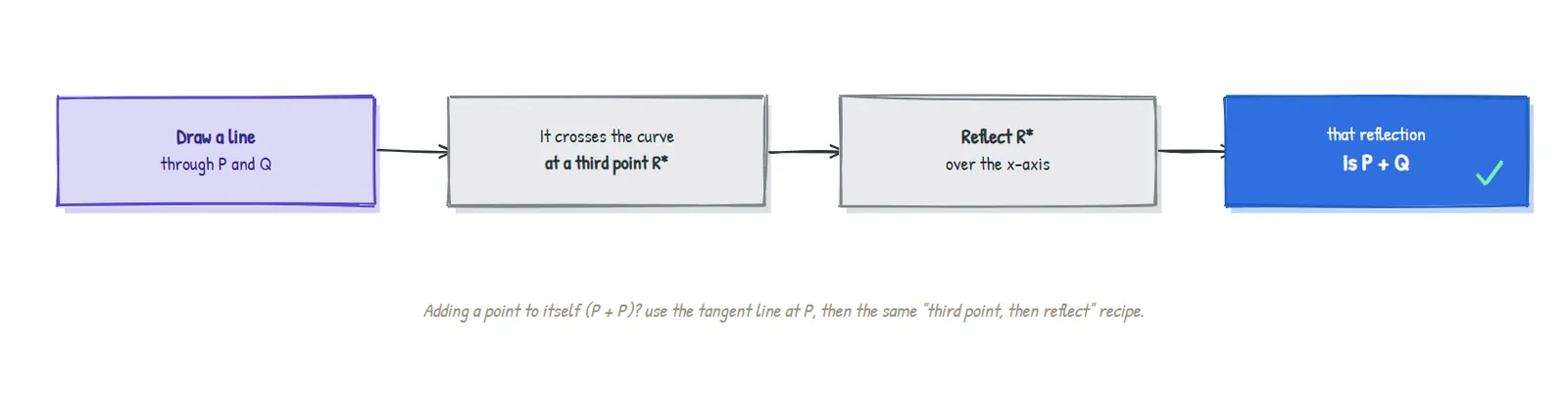
Iji gbakọọ P + P (ederede 2P), o nweghi ebe nke abuo i ga-adọta akara, ya mere i ji akara tangent na P Kama nke ahụ, gbasoo otu usoro "ntakịrị ụzọ nke atọ, ma tụgharịa uche".
That's the entire operation. Two geometric rules. With them, the points of an elliptic curve form what mathematicians call a group: a set with a well-behaved "addition." It even has a "zero."
Usoro ọnụọgụ ọ bụla chọrọ 0, ihe na-agbanweghi ihe ọbụla mgbe ị gbakwunyere ya. N'elu usoro elliptic, ọrụ ahụ bụ site n'otu ebe pụrụ iche a na-akpọ point at infinity, nke e dere OI nwere ike iche ya dị ka "ebe dị anya nke na-enweghị nsọtụ", ebe ahịrị ndị kwụ ọtọ na-agbakọ. O n'ebe ọ bụla na-ahapụ ya agbanweghị agbanwe, kpọmkwem dị ka ịgbakwunye 0.
The ezigbo usoro n'elu bụ intuition. Ma Zcash adịghị eji ezigbo nọmba (ha gburugburu na leak size, kwa Nkeji edemede 1). Ọ na-eji ihe elliptic usoro n'elu a n'ókèala: otu akụkụ y^2 = x^3 + ax + b, ma na arithmetic niile emere mod a isi.
Mgbe i mere nke ahụ, ọmarịcha curve ahụ ga-agbaji n'ime ihe dị iche iche na-enweghị njikọ, otu ntụpọ maka nke ọ bụla (x, y) di na nwunye nke na-eme ka ihe nhata mod pỌ na-akwụsị ịdị ka a usoro na niile. Ma ebe a bụ ihe dị mkpa:
** The algebra nke chord-and-tangent iwu ka na-arụ ọrụ n'ụzọ zuru okè.** Otu formulas na hụrụ
P + Qgeometrically now compute it with finite-field arithmetic. The dots still form a group, with the same0(ebe na-enweghị ngwụcha).
Ka anyị mee ka nke a bụrụ eziokwu site n'iji obere ihe atụ e nyochara nke ọma mee ihe.
Were ya y^2 = x^3 + 2x + 2 n'elu ubi a na-ejedebe F_17. Ịgụpụta isi ihe ọ bụla bara uru na-enye kpọmkwem 18 isi, gbakwunyere isi na enweghị njedebe = 19 ngụkọta. Ole na ole n'ime ha:
(0,6) (0,11) (3,1) (3,16) (5,1) (5,16) (6,3) (6,14) (7,6) (7,11) ...
Ugbu a họrọ ebe G = (5, 1) ma na-agbakwunye ya n'onwe ya. Lee ihe na-eme (ahịrị nke ọ bụla dị n'okpuru ebe a bụ nke e mere atụmatụ, ọ bụghị nke e chepụtara echepụta):
| Nzọụkwụ | Isi | Nzọụkwụ | Isi |
|---|---|---|---|
1G | (5, 1) | 11G | (13, 10) |
2G | (6, 3) | 12G | (0, 11) |
3G | (10, 6) | 13G | (16, 4) |
4G | (3, 1) | 14G | (9, 1) |
5G | (9, 16) | 15G | (3, 16) |
6G | (16, 13) | 16G | (10, 11) |
7G | (0, 6) | 17G | (6, 14) |
Ihe abụọ ị ga-arịba ama:
O** na nzọụkwụ 19, mgbe ahụ, ọ ga-ekpeghachi ruo mgbe ebighị ebi. G "na-emepụta" ìgwè ahụ dum, ya mere anyị na-akpọ ya onye na-emepụta ihe.1G + 2G = (5,1) + (6,3) = (10,6), nke bụ kpọmkwem 3G. Mgbakwunye ahụ na-agbanwe agbanwe n'ime, dịka otu ìgwè chọrọ.Tebụl ahụ nke 1G, 2G, 3G, ... bụ obi ihe niile. Ịgbakwụnye isi ihe ugboro ugboro na onwe ya ka a na-akpọ ** scalar multiplication **: isi ihe kG pụtara "G agbakwunye na onwe ya k oge. "
Ugbu a, ka anyị tụlee ụzọ abụọ e si eme anwansi:
| Ntuziaka | Ajụjụ | Ihe isi ike |
|---|---|---|
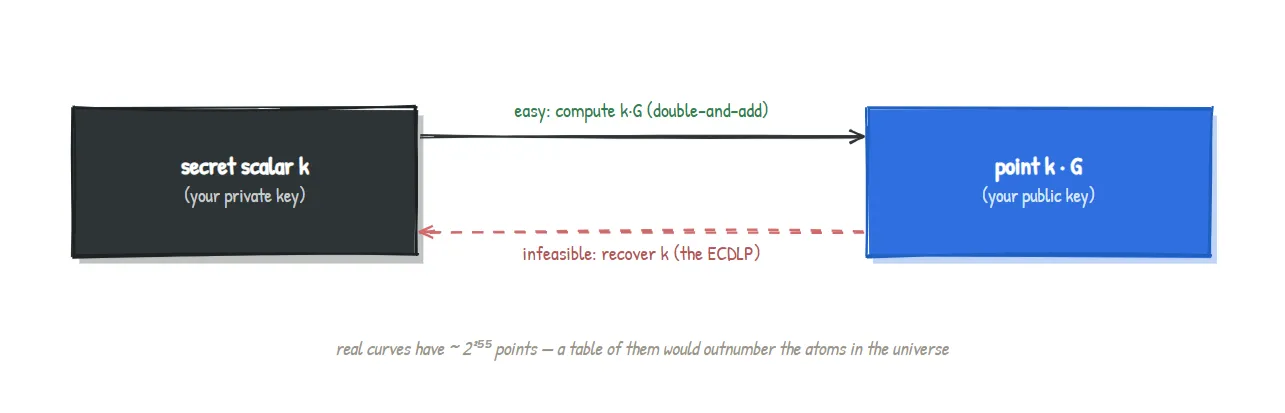
| Ndị Na-aga n'ihu | E nyere k na G, gbakọọ kG | Mfe. Ọbụna maka nnukwu ihe gbasara mbara igwe k, aghụghọ a na-akpọ double-and-add na-erute ebe ahụ n'ime narị nzọụkwụ ole na ole |
| Ala azụ | E nyere G na kG, gbakee k | Ọ gaghị ekwe omume nke ọma n'ezie usoro nzuzo |
Nke ahụ asymmetry bụ ** otu ụzọ n'okporo ámá ** anyị mkpa na Nkebi nke 1. k produced this point?") is called the Elliptic Curve Discrete Logarithm Problem (ECDLP), and on the curves Zcash uses, no known method solves it before the heat death of the universe.
! 
N'egwuregwu anyị
F_17I nwere ike ịgụ yakEzi curves nwere gburugburu2^(255)N'ihi ya, ọ bụrụ na anyị agụọ ihe ndị a n'akwụkwọ ahụ, anyị ga-achọpụta na e nwere ihe ndị ọzọ dị mkpa anyị kwesịrị ime.
Ugbu a anyị nwere ihe nile dị mkpa iji kọwaa ezigbo igodo nzuzo, ọ dịkwa nnọọ mfe:
**Họrọ nọmba nzuzo
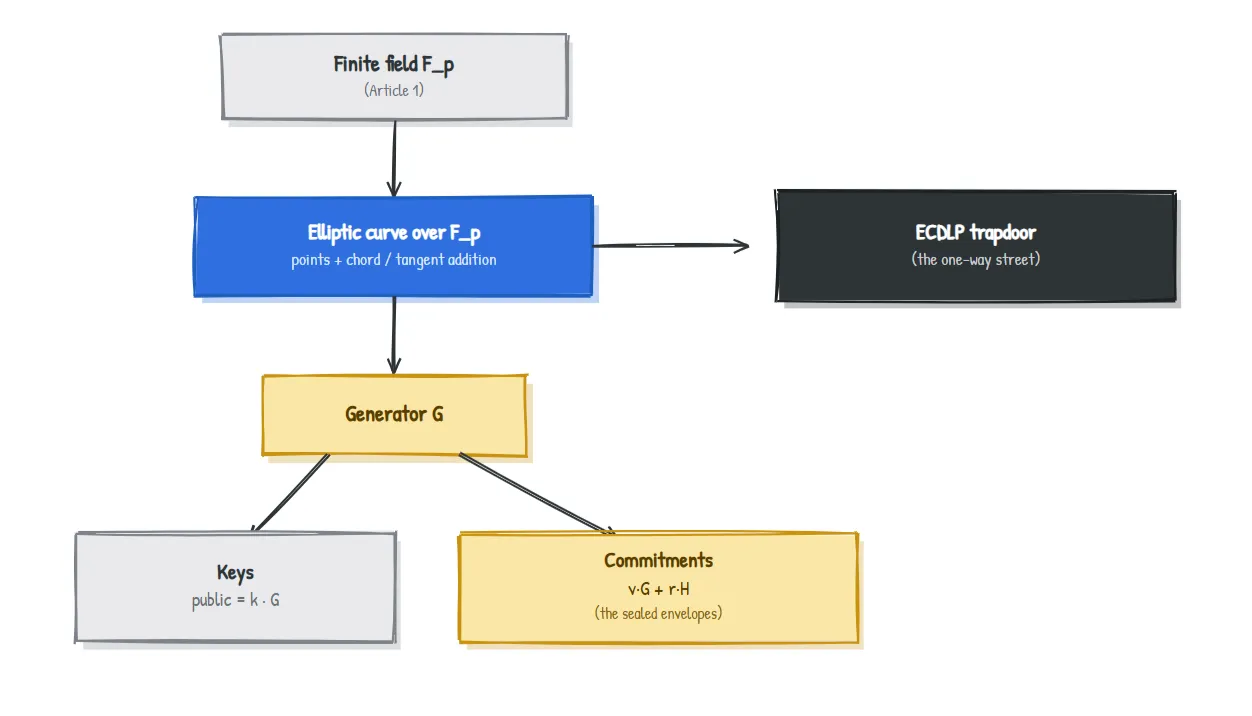
k. Kwusawa okwu ahụkGNke ahụ bụ ya.kbụ igodo nzuzo gị.kGbụ gị ** ọha isi **. The otu ụzọ n'okporo ámá (ECDLP) ana achi achi dịghị onye nwere ike na-agba ọsọkGlaghachi nak.
This single idea, a public key is a secret scalar times a fixed generator, is the seed of Zcash's spending keys, viewing keys, and addresses. The full key tree layers more structure on top, but every branch grows from this root.
Recall the "sealed envelope" (commitment) from Article 0, which had to hide its contents yet be impossible to forge. Elliptic curves hand us a clean way to build one. Take two fixed, public generator points G na H, ihe nzuzo bara uru v, na ọnụọgụ na-eme ka mmadụ kpuo ìsì r, na ụdị:
Commitment = v.G + r.H
Nke a bụ nkwa Pedersen, ma nwee ihe abụọ anyị chọrọ:
r na-eme ka nsonaazụ ahụ gafee usoro ahụ dum, ya mere, isi ihe ahụ anaghị ekpughe ihe ọ bụla gbasara v.(v, r) na-enye otu isi ihe, yabụ na ị gaghị agbanwe obi gị banyere ihe i kwere nkwa ime.A bonus onwunwe na-aghọ priceless mgbe e mesịrị: ndị a nkwa gbakwunye elu. v_1 gbakwunyere nkwa v_2 bụ nkwekọrịta dị irè v_1 + v_2. That "homomorphic" behaviour is how Zcash will later prove that the money going into a transaction equals the money coming out, without revealing any amount. We'll cash that in around Article 6.
Mkpịsị aka ndị ahụ bụ ihe e ji n'aka ma bụrụ ndị a pụrụ inyocha enyocha.
| Zcash design | Ihe ndị ọ na-eji | Ọrụ |
|---|---|---|
| Sapling (nke ochie) | BLS12-381 tinyere usoro agbakwunyere nke a na-akpọ Jubjub | BLS12-381 nwere sistemụ ihe akaebe; E wuru Jubjub n'elu ubi scalar BLS12-381's ka ọrụ isi na nkwa wee dị ọnụ ala iji n'ime ihe akaebe efu |
| Orchard (ugbu a) | Pallas na Vesta (usoro "Pasta") | Pallas na-ebu igodo na nkwa Orchard's; a haziri njikọ Pallas/Vesta nke ọma iji mee ka ihe akaebe dị elu dị irè |
The reasons one curve gets "embedded" inside another's field, and why a cycle of two curves is useful, are real and important, but they belong to the proof-system articles. For now the takeaway is solid: every Zcash key is a scalar times a generator, and every Zcash commitment is a sum of curve points, living on one of these named curves.
! 
Ihe ole na ole e mere iji mee ka ọ dị mfe ọgụgụ.y^2 = x^3 + ax + b); Zcash's curves are often written in other equivalent forms (Jubjub is a twisted Edwards curve) chosen for efficiency and safety, but the group idea is identical. We didn't define the exact point-addition formulas (they're the algebraic version of "third intersection, then reflect"), and we set aside subtleties like curve order, cofactors, and "pairings," which become important in the proof-system articles. None of this changes the intuition; it sharpens it.
y^2 = x^3 + ax + b, and its points can be added via the geometric chord-and-tangent rule, with a special point at infinity acting as zero.y^2 = x^3 + 2x + 2 n'elu F_17 nwere isi iri na itoolu, na G = (5,1) na-emepụta ha niile.)kG Ọ dị mfe ịgbakọ ma ọ gaghị ekwe omume ịgbanwe: ECDLP. Nke ahụ bụ ọnyà.k, igodo ọha kG. Nkwekọrịta: Pedersen ụdị v.G + r.H, nke na-ezo, na-ejikọta, ma na-agbakwunye.| Oge okwu | Nkọwa Bekee dị mfe |
|---|---|
| Elliptic curve | Isi ihe na-eju afọ y^2 = x^3 + ax + b, yana "mgbakwunye" pụrụ iche nke isi ihe |
| Point addition | Iwu chord-na-tangent: ahịrị gafere isi ihe abụọ, were nke atọ kụrụ, tụgharịa uche |
Point at infinity (O) | "Efu" nke usoro ahụ; itinye ya agbanweghị ihe ọ bụla |
Generator (G) | Isi ihe nke ọnụọgụgụ ya mechara kpuchie otu ahụ dum |
Scalar multiplication (kG) | Na-agbakwụnye G nye onwe ya k oge; dị mfe ịga n'ihu, siri ike ịlaghachi azụ |
| ECDLP | Nsogbu siri ike nke ịlọghachi k site na kGntọala nchekwa |
| Pedersen commitment | v.G + r.H; envelopu e mechiri emechi nke na-ezo, na-ekekọta, ma na-agbakwụnye |
Gịnị mere curves kama ịbụ naanị nnukwu ọnụọgụ mod a prime? Ha abụọ nwere ike inye otu ụzọ, mana elliptic curves na-enweta otu nchekwa ahụ na igodo pere mpe ma rụọ ọrụ ngwa ngwa, na ntụpọ arithmetic ha dị mma maka nkwa.
** ECDLP egosila na o siri ike?** Ọ bụghị ihe a na-apụghị ime eme, ma ọtụtụ iri afọ nke mgbalị siri ike achọtaghị mwakpo dị irè n'akụkụ ndị a họọrọ nke ọma. Nchebe dabeere na nkwenye ahụ a nwalere nke ọma
Kọmputa kọmpụta ọ̀ pụrụ imebi ihe a? Kọmputa kọmpụta buru ibu nwere ike imebi ECDLP. Nke ahụ bụ nchegbu a maara ogologo oge n'ime ụlọ ọrụ na mpaghara nyocha na-arụsi ọrụ ike; usoro nke taa ka dị nchebe megide kọmputa ndị mgbe ochie.
Gịnị mere Zcash ji eji ihe karịrị otu usoro? Different jobs. One curve carries the zero-knowledge proof system; another (embedded in the first's field) makes the in-proof key and commitment operations efficient. The next articles explain why that pairing matters.
N'iji tebụl e nyochara enyocha dị na Nkebi nke 3, gịnị bụ 9G + 10G Gịnị ka azịza ya na-agwa gị banyere G? *(Zaa n'okpuru.) *
9 + 10 = 19, anyị hụkwara nke ahụ 19G = O, bụ ebe na-enweghị ngwụcha. 9G + 10G = ONke a pụtara 10G bụ negative (additive inverse) nke 9G: two points that add to the "zero" point. On a curve, a point's negative is just its mirror image across the x-axis, and indeed 9G = (7,6) na 10G = (7,11) na-ekerịta otu ihe ahụ x ma nwee y- uru ndị na-agbakọta 17 = 0 (mod 17)Ọdịdị ahụ kwekọrọ nnọọ ekwekọ, nke bụ kpọmkwem ihe "ọ bụ otu" na-ekwe nkwa.
Article 3 . Hashing and commitments: we'll open up the "magic sealed envelope" properly. You've now seen one way to build a commitment from curve points; next we ask what hiding and binding really mean, meet hash functions, and connect both to the note commitments that anchor every Zcash payment.
8G |
| (13, 7) |
18G |
| (5, 16) |
9G | (7, 6) | 19G | O (enweghị ngwụcha) |
10G | (7, 11) |