Loading...

Series: Formal Verification Series · Part 2 of 3 - Akwankyerԑ a' ԑfa akwantuo ho. Ntoasoɔ: wɔn a wɔaba foforo. Ɔfã 1 de nhwehwɛ mu pɔtee baa hɔ; ha na yehyia ɔhaw ankasa no, nea ɛmaa ɛho hiae ntɛmntɛm no. Wɔkyerɛkyerɛ biribiara a ehia ase fi mfiase pɛɛ. Nea wode begyaw no ne: nsunsuanso a emu da hɔ nanso ɛyɛ nokware fa sɛnea cryptographic proof system betumi anya ahoɔduro ho, nea 2026 Zcash "Orchard" mfomso ankasa yɛe, deɛn nti na saa sintɔ yi tumi hintaw mfe pii, ɛne deɛ enti a asi pɛn.
Wɔ Ɔfã 1 no mu, yɛkaa sɛ nhwehwɛmu betumi akyerɛ nsunsuansoɔ bi wɔ hɔ nanso ɛnni hɔ da, na nsunsonu a ɛyɛ hu paa te nhyehyɛeɛ specification ne nkontabuo so. N'asɛmti yi yε case study. Afe 2026 mu no wohuu mfomso bi wͻ Zcash Orchard banbɔe ho a anka ɛbɛtumi ama obi abɔfra ayɛ sika nnaadaa biara bere nyinaa a obiara nhu. Ɛdii mfeɛ nnan ɛne nhwehwԑmu mpɛn pii akyi. Sɛ yɛbɛte ase yie sƐnso n'aberefofoɔ nso, ɛno ne nteaseɛ pa ara a ɛbɛma wɔatumi ahu kwan a wɔde di dwuma yiye ma asɔduro ahorow no adi pɛpɛɛpɛ.
Zcash yɛ cryptocurrency a ɛwɔ private mode. wɔ ne banbɔ mu no, sika dodow, wɔn a wɔde ma, ɛne nea wogye nkontaabu no so da hɔ.* Saa ahobanbɔ yi nam zero-knowledge proofs: cryptographic proofs sɛ dwumadie bi di mmara nyinaa akyi na ɛnkyerɛ nsesaeɛ no ho nsɛm ase.
That design has a double edge. On a transparent ledger like Bitcoin's, if someone conjured coins from nothing, the inflated numbers would be visible to everyone, and the network could catch it and roll it back. In a shielded pool, the numbers are hidden by design. So if the proof system itself had a flaw that let an invalid transaction look valid, the counterfeiting would be undetectable. You could not spot it by inspecting the ledger, because the ledger is deliberately opaque.
Saa pɛpɛɛpɛ na asiane a ɛbaa Orchard no yɛ. Sɛ yɛbɛte ase a, ɛsɛ sɛ yɛnhwɛ nea zero-knowledge proof ankasa hwehwɛ mu wɔ hɔ.
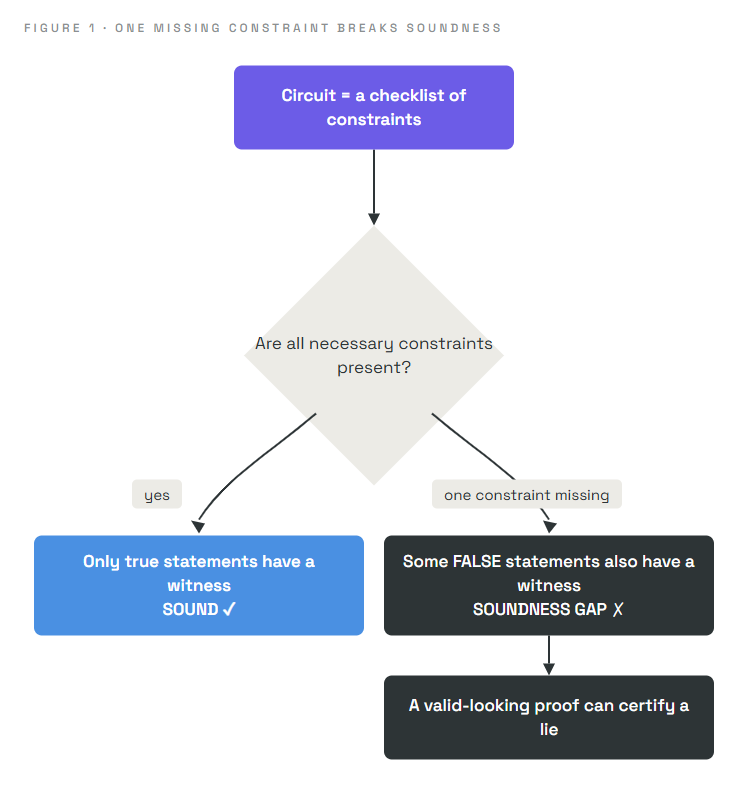
Susuw ɔsraani a ɔwɔ hye so no ho hwɛ sɛ obetumi agye akwantufo atom bere a ɔnhwɛ wɔn nkrataa tẽẽ. Mmom, ɔkwankyerɛfo biara de ne krataa hyɛ baabi na ɔpanyin no pene obiara a n'ahyehyɛde mu nsɛm nyinaa yɛ pɛpɛɛpɛ wɔ hɔ no so. Wɔayɛ saa kyerɛwtohɔ yi sɛnea ɛbɛyɛ a akwantufoɔ a wɔwɔ tumi nkutoo betumi ahyɛ nnaka biara ase.
Now suppose the checklist is missing one crucial box, say, "the passport is not expired." Almost everyone still fills it out honestly and nothing seems wrong. But a person with an expired passport can also tick every remaining box and sail through. The system looks fine in everyday use. The hole only matters to someone who goes looking for it.
A zero-knowledge proof yɛ adwuma te sɛ saa checklist no. Ɛmfa nkekae a ɛfa obi ho nkyerɛ; ɛhwɛ sɛ nea ɛwɔ mu no di tebea pɔtee bi so anaa. Na sɛ wɔayi ɔkwan pa biara so de ma, na afei wɔde nsɛm foforo nso ka asɛm a ɛmfata san kɔma bere a biribiara da adi sɛnea ɛte daa no ara pɛ.
Ma yɛmfa "nhyehyɛeɛ a wɔhwɛ so" no nyɛ pɛpɛɛpɛ, efisɛ ɛhɔ ara na ɔyaredɔm no te.
Under the hood, the statement "this transaction is valid" is encoded as a circuit: a fixed collection of arithmetic conditions, called constraints, written as equations over numbers. To make a valid proof, the prover must supply secret values (the witness) that satisfy every constraint. The proof convinces a verifier that such a witness exists, without revealing it.
Ade a yehia fi saa nhyehyɛe yi mu no wɔ din:
Ntease pa: Ɛnsɛ sɛ obi tumi de adanse a edi mu ma atoro asɛm bi. Nokware nsɛm nkutoo na ɛsɛ sɛ wonya adansefo a wɔsɔ nea ɛwɔ hɔ nyinaa ani.
Sɛ nea ɛwɔ hɔ no yɛ nokware a, ɛkyerɛ sɛ "mpɛsɛyɛ bi ankasa na ɛkɔɔ so". Nanso sɛ biribi wɔ baabi a enni mu a, ɛnkyerɛ hwee koraa.
Mpɛn pii no, ɛho hia sɛ wɔde nhyɛso ma biribi yɛ nea ne ho nni asɛm. Nhwɛsodeɛ a wɔtaa de di dwuma paa: hyɛ nneɛma bi so na ayɛ tiawa b sɛ ɛyɛ nkekae bi, anaa 0 or 1Sεnea y'ԑbͻ no, nsunsuanso baako na εwᴐ mu:
b × (b − 1) = 0
Enti, sɛ yɛkyerɛ nea ɛyɛ a y'atumi de yɛn akwaa baako pɛ adi dwuma wɔ afotusɛm no mu. b × (b − 1) = 0 ahoɔdennantenne b = 0 or b = 1Sɛ yɛhwɛ 0 kɔsi 16 (wɔ akontaahyɛde a ɛtwa 17 ho), *sɛnea ɛbɛyɛ na ne nyinaa bɛyɛ pɛpɛɛpɛ no, 0 ne 1. ✓
Afei fa no sɛ, saa kwan yi na wɔde ato mfinimfini a wonnuu ho. b Obi a onni nokware betumi de nsɛm bi ato hɔ ama obi. b to 5, or 9Saa ɔfã a enni hɔ no yɛ asɛm bi: sɛ́ atoro adansefo wɔ adanse pa.
This is not a hypothetical. A missing boolean constraint of exactly this kind was found in Zcash's very first shielded design, Sprout, during development, and fixed before launch. Under-constraining is one of the most common and dangerous mistakes in building these circuits.
Eyi ne Orchard mmoawa no nyinaa su, wɔ nketenkete so. Afei ade a ɛyɛ nokware ankasa.
Zcash's shielded proofs are built on elliptic curves, mathematical objects whose points can be combined and "multiplied" by numbers, operations the circuit has to enforce with constraints. The circuit contains gadgets that perform elliptic-curve multiplication and check that it was done correctly.
Sɛnea Shielded Labs ne nhwehwɛmufo Taylor Hornby adi no, Orchard mfomso no yɛ eyi:
Na Orchard amansin no mu ade a w'aka akyere ho yiye ma wotumi de nsɛm bi di dwuma wɔ ɔkwan bɔne so na ama wɔde nea ɛwɔ elliptic-curve mmobɔso ase, nanso da so ara nya ne nsunsuanso.
In plain terms, the circuit's checklist was missing the boxes that should have pinned down that multiplication. Because of the gap, a sufficiently expert attacker could construct a transaction proof that the system would accept even though the transaction created value from nothing. That is counterfeiting, and because amounts in the shielded pool are hidden, it would have been undetectable from the ledger. The Tachyon team later described the same flaw at the code level as missing lines in the circuit that quietly scrambled the underlying equations.
Nsɛdi a ɛwɔ yɛn asɛm no mu yɛ pɛpɛɛpɛ:
| Checklist asɛm no | Nnua a wɔfrɛ no Orchard bug no |
|---|---|
| "passport not expired" adaka bi a ayera | Anohyeto a ɛyera wɔ elliptic-curve multiplication so |
| Ɔkwantufo a ne akwantu tumi krataa a ne bere atwam twam ɔkwan biara so | Atoro nsɛm a wɔde hyɛ mu a wɔpɛ no twa dodow nhwehwɛmu no mu |
| Obiara a aka no nnya so nkɛntɛnso, enti biribiara nni hɔ a ɛte sɛ nea ɛnteɛ | Nkitahodi a wɔtaa yɛ no yɛɛ adwuma pɛpɛɛpɛ, na ɛde sintɔ no siei |
| Obi a ɔrebɔ abɔmmɔ nkutoo na ohu tokuru no | Egyee onimdefo bi a ɔhyɛɛ da hwehwɛɛ ɔmansin no akontaabu mu |
Sɛ yɛbɛte ase yie sɛ eyi yɛ aniberesɛm: nhwehwɛmufoɔ no, a AI mmoa wɔ mu no kyerɛw * exploit adwuma awieɛ* na ɔdaa adi wɔ amansan nhyehyeԑ so sε ɛde sika atorosom bebree aba. Eyi yεε mfomso ankasa ne nea wobetumi de ayɛ dwuma, ɛnyɛ adwendwene bi ho dadwen.
Ɔhaw no traa Orchard fi bere a wɔpenee so wɔ May 2022 mu kosii sɛ wɔde too hɔ ntɛmntɛm June 2026 mu, denam nhwehwɛmu ahorow a adwumakuw bi yɛ maa wiase ahwehwɛde pa ho akyerɛwfo. Ɔkwan bɛn so?
Because, as Part 1 warned, testing samples cases, and this flaw lived in a case nobody sampled. Ordinary transactions never exercised the missing constraint, so every test passed and every day of normal operation looked flawless. The flaw was reachable only by deliberately constructing an unusual witness aimed squarely at the gap. It was ultimately found not by running tests but by reasoning about the circuit's mathematics.
The discovery itself is a sign of where security is heading. In April 2026, Shielded Labs engaged security researcher Taylor Hornby specifically to hunt for exactly this kind of flaw. Shortly after a new frontier AI model (Anthropic's Claude Opus 4.8) was released in late May 2026, Hornby used it, together with a custom analysis harness and traditional methods, in a targeted review of the Orchard circuit. On May 29, 2026, the review found the vulnerability.
Nkyerɛkyerɛmu abien a emu da hɔ wɔ nsɛm no mu nti na ɛsɛ sɛ yɛka pefee:

Orchard nsunsuanso no yɛ abusua a wɔtaa ka ho asɛm, na sɛ wohu saa abusua yi nti, ɛnyɛ nea ɛma w'ani gye ankasa ne sɛ wobɛyɛ nhwehwɛmu. Adansedie mu mfomso biara gyina nneɛma mmiɛnsa bi so (sɛnea wɔn su te wɔ Ɔfã 1): nkyerɛmu (nsekyerɛmu) no ara, adeyɛ* no (nhyehyɛeɛ a ɛnni mmaransɛm papa akyi), anaa adwenesakra kwan pa.* Na ɛho hia paa:
Sɛ nkontompo bi wɔ "specifications" no mu a, ɛntumi nhunu. Nkrataafa biara nni hɔ a ɛbɛkyerɛ sɛ saa nsɛm yi yɛ nokware anaa ɛnyɛ nokorɛ. Enti bere a obi resan adi dwuma bio na wakyerɛw ne nyinaa ato hɔ ama ɔmanfo no nti, ɔdan biara bɛhwɛ so ayɛ adwuma daa.
Zcash ankasa abakɔsɛm kyerɛ saa kwan no:
| Bug (afe) | Farebae | Wotumi hu? |
|---|---|---|
| Zerocash ahofama sintɔ (2016, ansa na wɔrefi ase) | Nkyerɛkyerɛmu (hash a wɔatwa no tiaa bubuu binding property) | Wontumi nhu |
| Trusted-setup soundness sintɔ (2018) | Nkyerɛkyerɛmu (mfomso a ɛwɔ zk-SNARK krataa a ɛwɔ ase no mu) | Wontumi nhu |
| Proving-system asɛmmisa nhyiam (2025) | Specification (cheque a ɛyera wɔ adanse nhyehyɛe no mu) | Wotumi hu |
| Curve-subgroup validation bɔne (2016) | Dwumadi (kuw nketewa nhwehwɛmu a ɛyera) | Wotumi hu |
| Orchard under-constrained dodow a wɔdɔɔso (2026) | Nkyerɛkyerɛmu (ɔmansin no) | Wɔnntumi nhu |
N'asɛm no mu da hɔ pefee: mfomso a ebetumi ahinta daa ne nea ɛwɔ akontaabu mu. Saa pɛpɛɛpɛ na adesuade bi wɔ kontai ho, sɛ yɛhwɛ emu nsɛm nyinaa so prɛko pɛ a yebetumi ayi afi mu. Nhwehwɛmu ne nhwehwɛmu; nkontabuo nkutoo na ɛboa ma wotumi hu ade biara a wɔde ba.
Zcash defo no yɛɛ ntɛm na wɔtwee wɔn ho:
Saa ɔfã a ɛtɔ so mienu no mu na w'akyerɛ sɛ woahyɛ mmara ase, ɛne asɛmti wɔ Ɔfa 3. Nhuano a kuw yi dii ho dwuma no yɛ nea ɛfata sɛ yɛde yɛn ani hwɛ kan efisɛ ɛbɔ saa asete nyinaa bom:
Enti sɛ wubetumi akyerɛkyerɛ mu ma ayɛ yiye a, worentumi nyɛ nkontompo bio. Woayi ɔfã biara a na wɔakɔnhyɛ no afi hɔ mfe anan ni.
Saa pɛpɛɛpɛ na yɛreka wɔ ɔfã a edi kan no mu: di adanseɛ sɛ nneɛma pɔtee bi ho hia, na woatumi adi deɛ w'ani nna so.
We simplified deliberately. The real circuit involves hundreds of regions and many thousands of constraints, and the actual flaw is more technically intricate than a single missing bit-check; we used the bit-check because it shows the shape of an under-constrained circuit exactly, and because that exact mistake is real in Zcash's history. The precise Orchard flaw was an under-constrained elliptic-curve multiplication, as stated in the official disclosure. We also compressed the disclosure and remediation timeline. For the authoritative technical account, consult the Shielded Labs disclosure and the Project Tachyon writeups.
b(b−1)=0 ahoɔdennantenne b de kɔ 0 anaa 1; gyaa no na ma ɔnkɔ so nyɛ adwuma. b Saa nsunsuansoɔ yi ara na ɛwɔ Zcash abakɔsɛm mu.)| Asɛmfua | Plain-English asekyerɛ |
|---|---|
| Shielded pool | Zcash kokoam mode a wɔde sika ne apontow ahorow asie |
| Zero-knowledge proof | Adanse a ɛkyerɛ sɛ asɛm bi a ahintaw yɛ nokware, a ɛnna biribi foforo biara adi |
| Circuit | Akontaabu tebea horow a wɔahyɛ da ayɛ a ɛsɛ sɛ asɛm a ɛfata di ho dwuma |
| Constraint | Tebea biako (equation) a ɛwɔ ɔmansin no mu |
| Witness | Kokoam gyinapɛn ahorow a ɛma anohyeto ahorow no di mu |
| Soundness | Awerɛhyem a ɛne sɛ nsɛm a ɛyɛ nokware nkutoo na ebetumi ama wɔanya adanse a ɛfata |
| Soundness gap | Anohyeto a ɛyera a ɛma atoro nsɛm twam |
| Under-constrained | Ɔmansin bi a ɛyera tebea bi a na ehia, Orchard mmoawa no ntini |
| Detectable / undetectable | Sɛ́ ebia mfaso a wɔde bedi dwuma no bɛma wɔagyaw adanse wɔ ɔmanfo ledger anaa |
Nneɛma a wɔabɔ Zcash no ankasa? No evidence of exploitation was found, and the team considers it unlikely. But because the flaw would have been undetectable from the ledger, the ledger alone cannot fully prove it never happened, which is why the response was so thorough.
Adɛn nti na sika a wode sie no ma ɔyare mmoawa yɛ kɛse? Sɛ wɔde sika a wɔabɔ no sie ma obiara nhu sɛ ɛyɛ nea ɛteɛ anaa ɛnyɛ saa, na obi ntumi nhunu nneɛma foforo biara nti, wobetumi ayɛ ho adwuma.
Adɛn nti na mfe a wɔde yɛɛ nhwehwɛmu no anhu? Audits ne tesɛ bebree hwehwɛ abrabɔ wɔ realistic nsɛm mu. saa mfomso yi ara na ɛpuee ase bere a w'ayɛ no nkontraso, aberɛ aa wode adwenkyerɛ bi di dwuma de kyerɛ sɛ biribi yɛ mathematical edge case (ɔkwan foforɔ) so, ɛno deɛ wo nhwehwεmu biara nni ho. Ɛnam adwene pa akyi dweneeɛ ntia nea ɛwɔ circuit no ho, ɛnyɛ nhwehwɛmu.
So ahwehwɛde a enni hɔ nkutoo na ehia? Yiw. Nkyerɛmu a edi mu no yɛ den sɛ emu ahwehwɛde ahorow nyinaa, na nea ehia biako pɛ a wɔayi afi hɔ ma nsɛm bi a enni nnyinaso ba so ara dɔɔso.
Dwuma bɛn na AI dii? Nhwehwɛmufo bi de AI a edi mu no yɛɛ adwuma kaa ho, ɛne amammerɛ kwan ahorow ne atetesɛm akwan bɛhwɛ nkorabata yi akontaabu so na wɔahu mfomsoɔ. Wɔde AI di dwuma kɛse paa wɔ ahobammɔ afã nyinaa, ɛno nti na nnɛ nneɛma pii hia ma sɛ wɔbɛkyerɛ sɛ nhyehyɛe yɛ papa no.
Suppose a shielded transaction is supposed to prove "money in equals money out," but the circuit forgets to constrain one output value. What could a dishonest prover do, and why would the public ledger look completely normal? (Answer below.)
With that output unconstrained, the prover could set it larger than the real inputs allow, creating value from nothing, a counterfeit. The proof would still verify, because the missing constraint is the only thing that would have caught the imbalance. And since the shielded pool hides amounts, the ledger shows only that "a valid transaction occurred," with no visible imbalance to raise an alarm. The forgery is real but invisible, which is exactly why soundness of the circuit matters so much, and exactly why it must be proven rather than tested.
Ɔfã 3 · Ironwood: no yɛ patch. Zcash engineers sii banbɔ a wɔabɔ ho ban foforo na wɔde ne mfidie dii dwuma de yɛɛ mathematical proof, aboro 2,700 theorems kyerɛw guu Lean proof assistant mu sɛ entumi nyɛ sika bɔne biara wɔ gyinapɛn ahorow a ɔde too hɔ so no ase. Yɛbɛhwɛ nea "balance integrity" ɛne "knowledge soundness" kyerɛ ankasa, deɛ saa adansedie yi tumi di faako, ne ɔkwan a ɔfaa so gyee tete banbɔ dedaw no toom.
Ɔfã bi a Official Verification series wɔ ho ma wɔn a w'ɔwɔ hɔ no. ZecHub.